Search Artists
 Search Disciplines
 Search
Places
Search
Places
Image
Image

Role
Advisor for Hungary, Poland, Ukraine & Turkiye
Email
t.stepanovic [at] dutchculture.nl

 Frisse Oren de Stilte Frans van de Staak (1943-2001) Sven Ratzke Blasterjaxx
 Education
 Poland
France
Italy
Edinburgh
Copenhagen
Seoul
Poland
France
Italy
Edinburgh
Copenhagen
Seoul
For this series, DutchCulture invited the Ukrainian Institute to help select four essays that offer international readers a deeper understanding of Ukrainian culture through the eyes of its own critics, curators, and thinkers. Spanning cinema, photography, exhibition-making, and women’s artistic practices in wartime, the texts reflect on identity, ideology, landscape, memory, and survival. Three of the four articles had not previously been available in English and were translated by DutchCulture for this series. Together, they form a small but rich constellation of perspectives on Ukrainian culture, past and present.
This first article, by Anastasiia Neroznak, revisits Kira Muratova as one of the most distinctive filmmakers associated with Ukraine, whose work resists simple categorisation while remaining deeply shaped by questions of place, language, and identity. Rather than reading her only through the lens of auteur cinema, the text explores how her films reveal subtle markers of belonging and nonconformity, and why her legacy matters within Ukrainian cultural history.
Recently, in 2023, two early films by Kira Muratova—Brief Encounters (1967) and The Long Farewell (1971)—were restored in 4K and screened in the United States. There, they drew a lot of media attention. Most articles referred to Muratova as a director who lived in Ukraine, noting that she was born in what is now Moldova, then part of Romania. In the past, foreign media often described her as a Russian filmmaker. For instance, in 2009, an article about her was included in a book on Russian cinema published in Oxford.
As part of the Territory of Culture project, created in partnership with the company First Private Brewery, we aim to return Odesa filmmaker Kira Muratova to the Ukrainian cultural context—along with her gently melancholic yet controversial view of time and the world.
If one were to characterise her work and life with a single word, "non-conformity" would be the most fitting. Kira Muratova and her films during Soviet times did not conform to the political, social, or cultural frameworks of the era. It seems that the only time she genuinely attempted to attune herself to a specific time and place was in Odesa in the late 1980s and 1990s. This disconnection also contributes to the complexity of Muratova as a figure. Romanian by descent and citizenship until the 1980s, Muratova studied directing in Moscow—perhaps the only element that aligns with the label "Russian filmmaker." Immediately after her studies she was assigned to Odesa*, where she remained until her death in 2018, creating the majority of her films there.
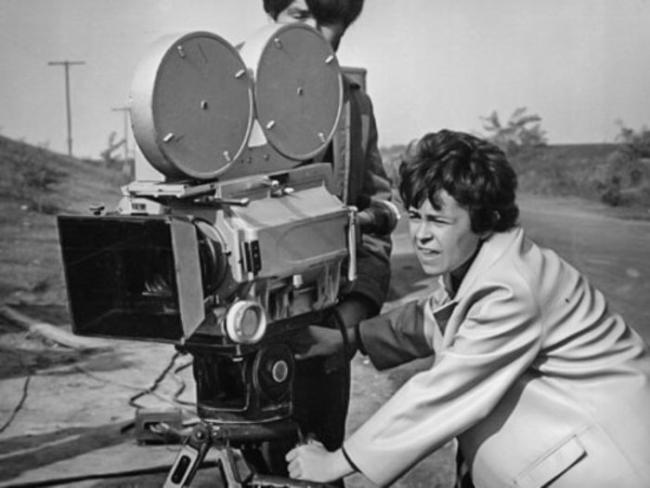
One of her earliest works, Our Honest Bread (1964), was made at the Odesa Film Studio together with her then-husband, Oleksandr Muratov. The film romanticizes the life of an ordinary Ukrainian village while simultaneously observing it with certain detachment. Her next films, made independently—Brief Encounters and The Long Farewell (which were restored and shown in the U.S. in 2023), immediately ran into severe Soviet criticism.
From the authorities’ perspective, Brief Encounters was intended to be a story about the life of a geologist and a local council worker. Instead, it turned into an arthouse drama about a love triangle, where the characters are less concerned with heroic labour feats and more engaged in metaphorical dialogues. Muratova herself played the lead role. The story of The Long Farewell was even more tragic. The film was shelved for 16 years, only being released in 1987. Muratova had refused to perform the edits demanded by the Odesa Film Studio’s management, resulting in her being reassigned as a librarian and barred from directing.
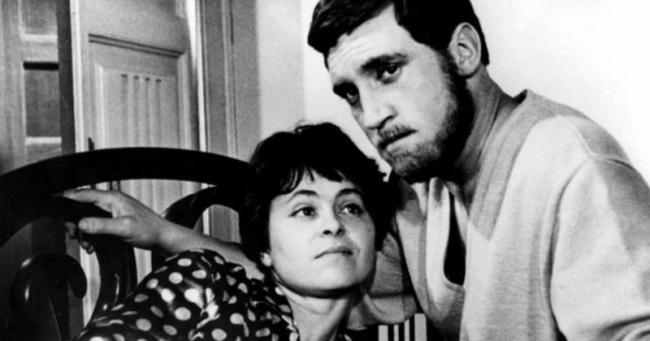
Soviet authorities condemned Muratova’s films for the visible influence of her cinematic idols of the global "bourgeois" cinema, particularly Michelangelo Antonioni. More broadly, all of her Soviet-era films were deemed "insufficiently communist"—she pursued her own philosophical vision, disregarding the ideological expectations imposed on cinema as the "most important of all the arts." And yet, it seems she was never particularly afraid of government repression. It was as if Muratova already knew her films would be shelved—not for being "anti-Soviet," but rather for being too authentically "Soviet" in their contradictions.
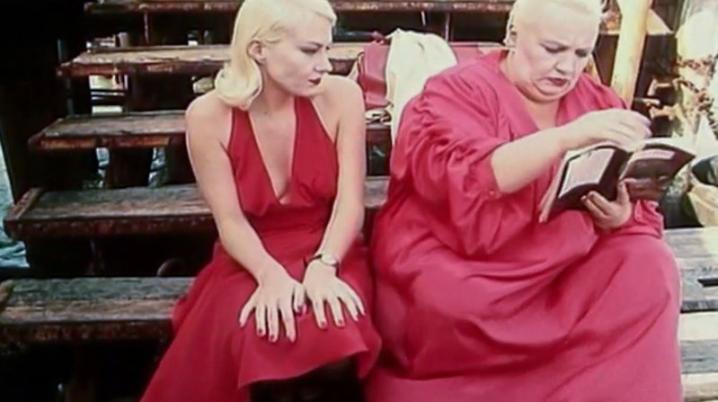
The 1990s brought her more creative freedom. Her films became even more eccentric for the average viewer and even more pessimistic in the eyes of critics—yet they resonated, finding their audience. Such was the case with her most famous film, The Asthenic Syndrome (1989), which won the Special Jury Prize at the Berlin International Film Festival. It is perhaps the only Muratova film where the characters do not exist in isolation from their era but are deeply embedded in it—specifically, in the perestroika years. The lives of grey, unremarkable people enduring grey, joyless times, as small personal tragedies unfold against the background of a post-Soviet narrative in a dense, three-hour-long film.
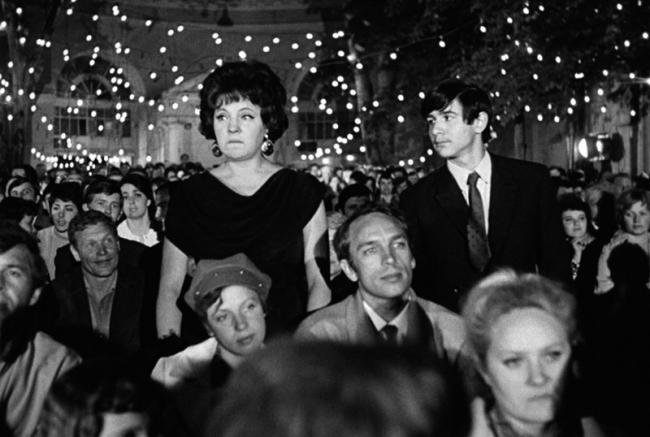
All of her subsequent works, filmed in independent Ukraine at the Odesa Film Studio and within Odesa itself, could easily be placed in other historical contexts and eras. Muratova continued to strip away aspects of daily life and politics that did not interest her, focusing instead on the internal worlds of her characters, detaching them from external realities. The young women in Passions (1994) could just as easily have been choosing their lovers among jockeys in the 19th century, just as Ofa in Three Stories (1997) could have strangled a mother abandoning her newborn in 2020. However, Odesa itself remained a vital presence in her films.
During the 2000s, Muratova released several films that premiered at major European festivals, from Venice to Rotterdam. Her final film, Eternal Homecoming (2012) was described as a "hypnotic vortex" at the Rome Film Festival. After its premiere, she announced her retirement from filmmaking due to declining health and old age. She continued to live in Odesa until her death in 2018.
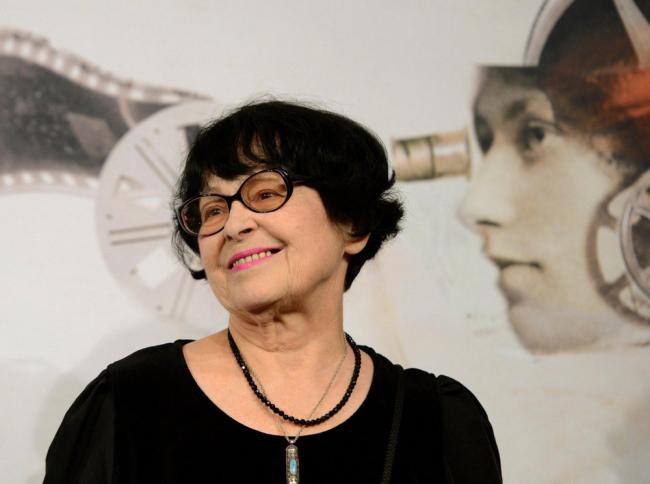
Muratova made films, first and foremost, for herself—as a personal manifesto of her own nonconformity. She sought to exist beyond borders and refused to be confined to any social or historical framework. She spent most of her life in the Soviet Union, yet it would be difficult to call her a Soviet filmmaker, given that her works were repeatedly censored and banned. Nor can she be neatly classified as Russian, despite repeated attempts to label her as such.
Film scholar Aliona Penzii of the Dovzhenko Center comments: In 2014, after supporting the Revolution of Dignity, Kira Muratova made it explicitly clear where her allegiances had always been. That’s why I would shift the focus away from her national identity and instead emphasise her films. Are her films Ukrainian? Absolutely! She made nearly all of them, except Getting to Know the Big Wide World, at the Odesa Film Studio with a team of Ukrainian professionals. The leading roles in her films were played by Ukrainian actors, or simply by fascinating, extraordinary Odesans. Her outdoor scenes—perhaps the most dominant feature in her films—were unmistakably set in the landscapes of Odesa.
Translated by Yuliia Elyas
*Footnote from the translator: In the Soviet Union, university graduates in many fields were subject to mandatory job placement by the state. Upon completing their studies, they were "assigned" to positions at various institutions or enterprises, often with little personal choice in the matter. Muratova was assigned to work at the Odesa Film Studio, where she went on to spend the majority of her career.