Search Artists
 Search Disciplines
 Search
Places
Search
Places
Image
Image
Role
Advisor for Belgium, France, Germany & the United Kingdom & Interim Advisor for Italy & Spain
Email
a.moerk [at] dutchculture.nl

 Nicky Romero ISH Dance Collective MARRØN Herman van Veen Vincent de Rooij
 Education
 Turkey
Japan
Portugal
Chicago
Hamburg
New York
Turkey
Japan
Portugal
Chicago
Hamburg
New York
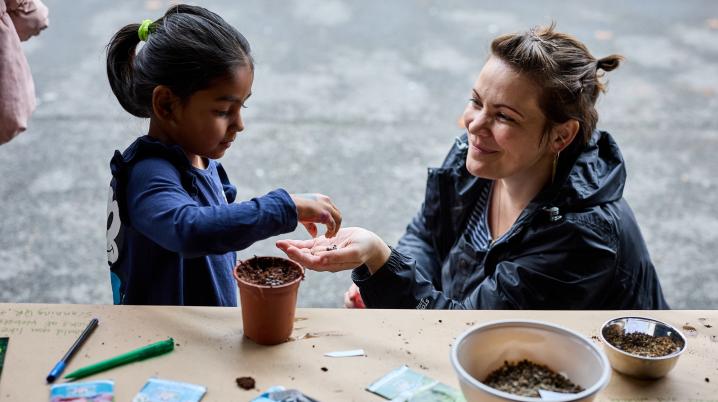
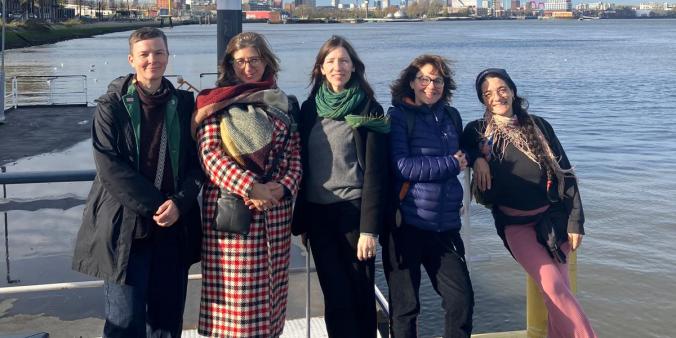
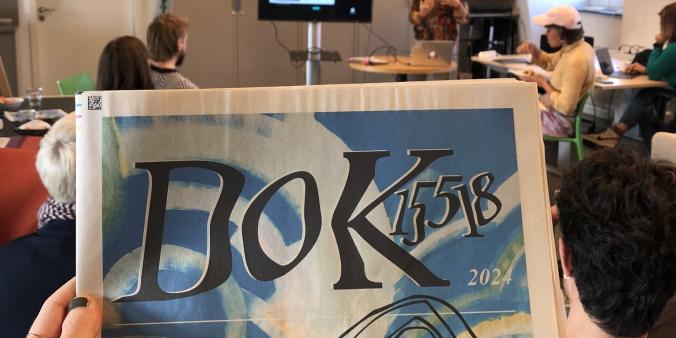
In November 2025, DutchCulture invited five cultural professionals from Belgium, France, Germany, Spain and United Kingdom to exchange about regenerative practice in the cultural sector. The programme grew out of a shared curiosity: how can cultural work contribute to regenerating the living systems we are part of? Our five visitors all facilitate cultural programming in the form of exhibitions, events and residencies that are committed to improving the health of their ecosystems in a time of waning biodiversity and climate catastrophe. Through their cultural programming and art residencies, they offer alternative ways of experiencing a world that centers around more-than-human life.
In this article series, DutchCulture reaches out again to these five visitors to share their views on regenerative culture, important aspects of their organisations and residencies, and how you could be part of it.
Janet Vaughan is Co-Artistic Director of Talking Birds, a Coventry-based theatre and arts company, and steward of The Nest — a regenerative creative hub and artist residency space in the heart of the city of Coventry. A grower, gardener and careful observer of the more-than-human world, Janet brings a practice rooted in reciprocity, care and the slow, deep work of cultural regeneration. After her visit to the Netherlands in November 2025, she wrote a long-form reflection on her blog Words from the Birds, a piece of writing that has stayed with us.
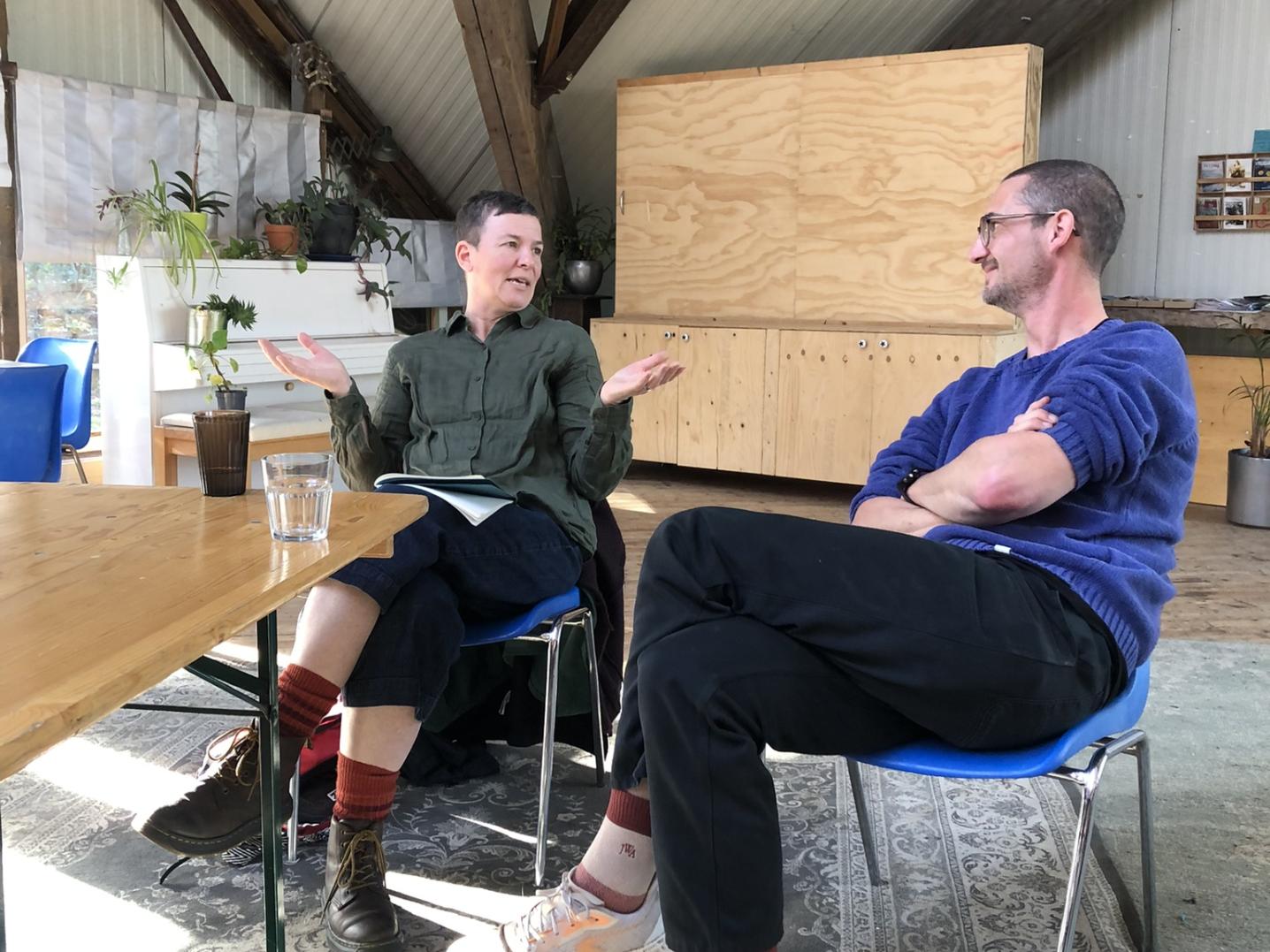
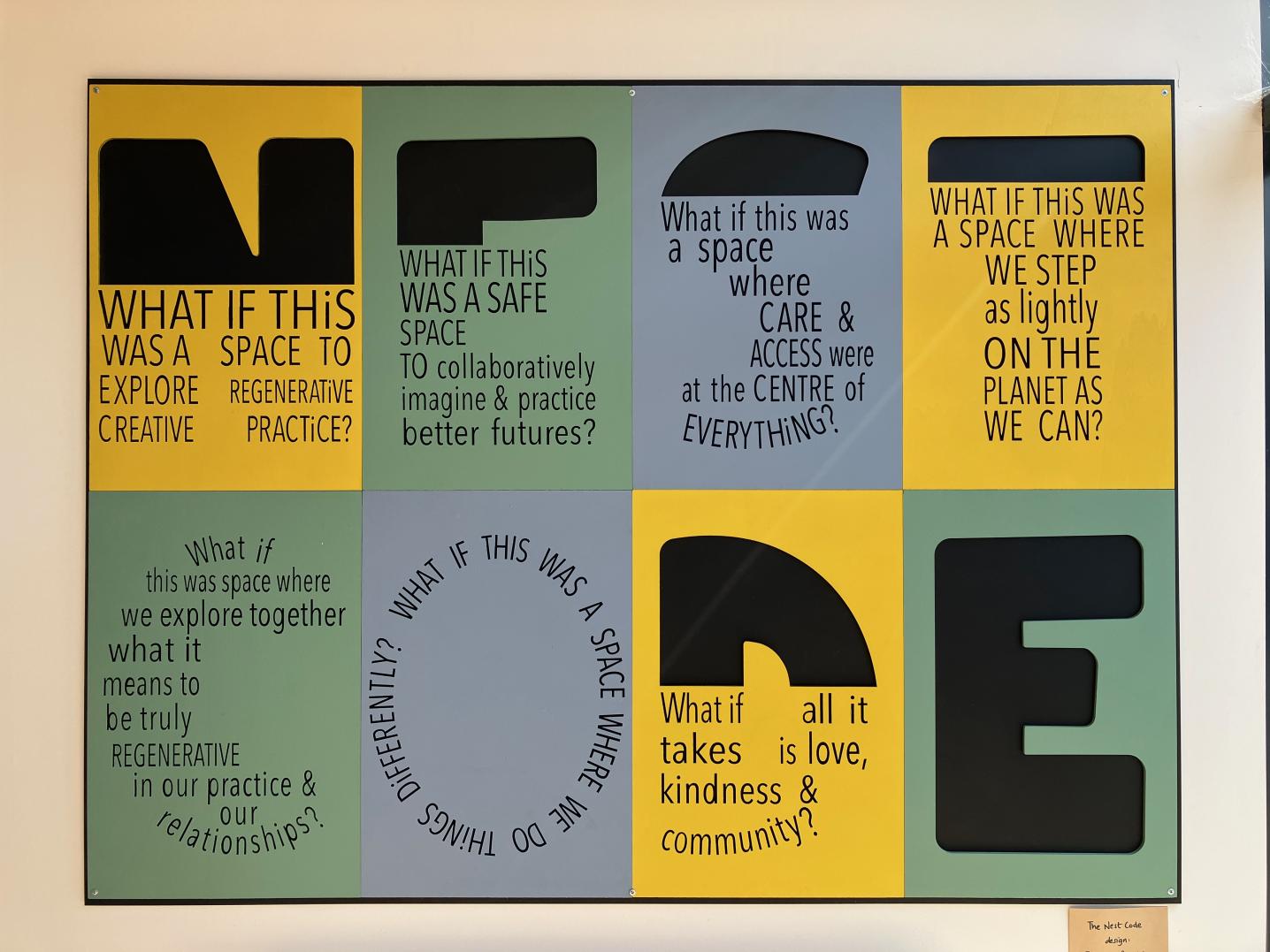
After 30 years of working peripatetically - both making our own work as a theatre company and supporting other artists to develop their practice - finally having our own space has allowed us to really increase the range of work we do, and the impact it has. We designed The Nest as a shared making space, a home base for Talking Birds, and a place to bring together our creative, climate and social justice concerns together under the banner of Regenerative Creative Practice - which has a focus on:

We decided to name our work as Regenerative Creative Practice because we wanted a term that would suggest creating with purpose, and could hold both ecological and social concerns. So, you could say it is an evolving methodology and a journey we are on, a guide, or maybe a statement of intent.
In part regeneration, for us, is correcting a course of travel: steering away from the capitalist and colonialist course, making work in a way that helps dismantle or unlearn extractive and exploitative thinking, method, behaviours and relationships - with both humans and nature. It’s relational - about cultivating openness, care, sharing, joy, imagination, repair, service, reciprocity, connection and belonging. And it asks (given that every living thing has a part to play) ‘How can we, as artists, help the world regenerate in a way that is equivalent to the way a forest does? What is our role?’
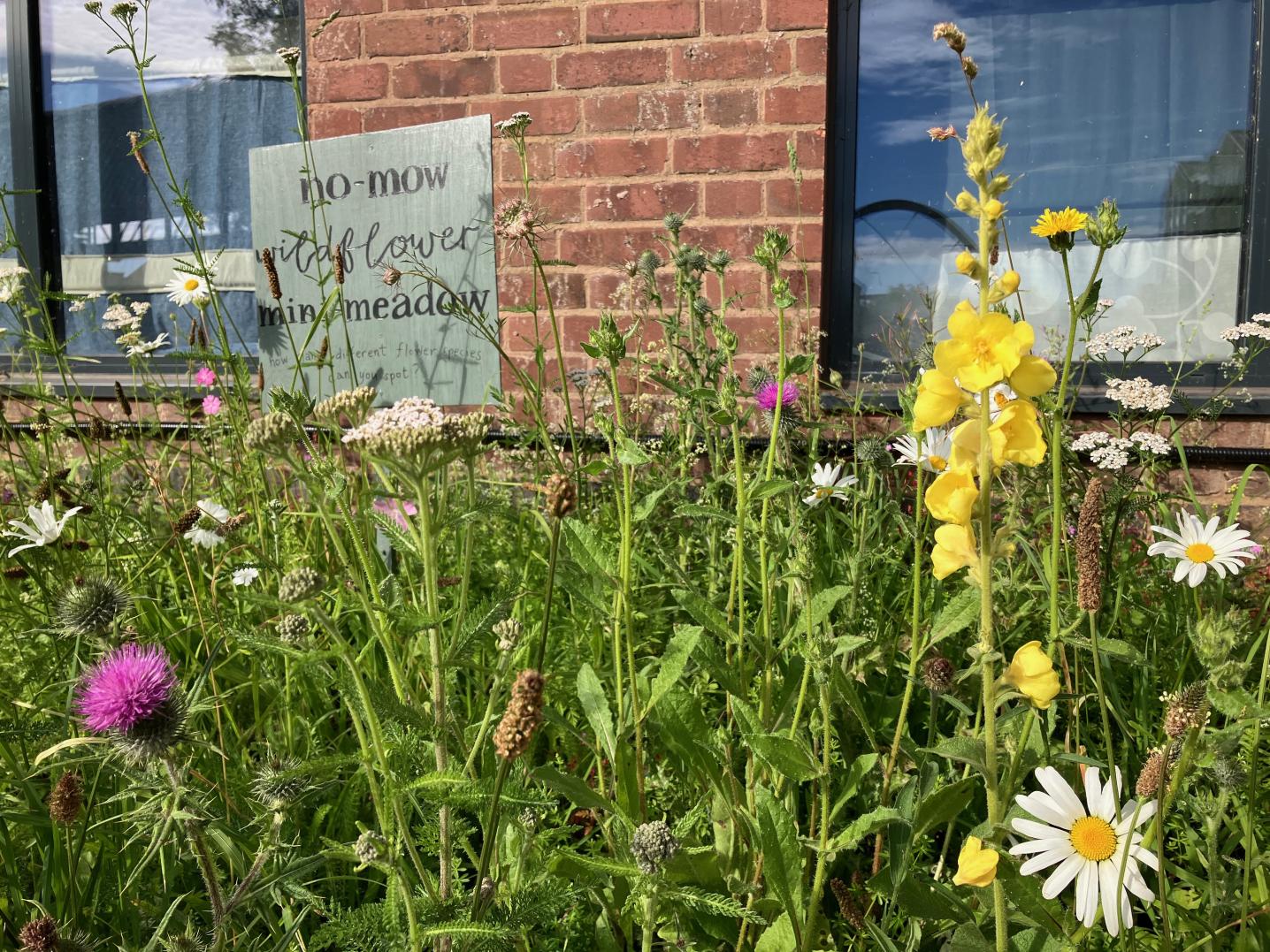
So it’s about us making ecological renovations that create the conditions for nature to thrive in the spaces we steward, and making relational renovations that create the conditions for humans to thrive: this mutual thriving is regenerative.
There are some brilliantly generous and inspiring organisations and individuals in the cultural, academic and community spheres that we have walked alongside, collaborated and exchanged ideas with over the years, but it’s often the thinkers who are talking or writing about other disciplines (like permaculture, town planning, history, democracy, nature recovery, imagination or agroforestry, for example) who articulate ideas or perspectives that spark new ways for us to think deeply and differently about our work and regeneration. It feels like there are currently a lot of people coming from different perspectives and disciplines who are also working towards a similar vision of a better future, and that's really energising.
Many of the thoughts and reflections have stayed with me and continue to resonate, or act as a kind of compass, precisely because I took the time to write that blogpost - and that learning has really influenced the way our current projects are unfolding. It’s an incredible gift to be invited to step out of your normal life for a week of exploring, conversations, learning and thinking. Maybe that is what has stayed with me most: that this time and space to step outside of things in order to explore, learn and think is both regenerative and very necessary.
The one thing that didn’t make it into the blog, but has definitely stayed with me, is the fabulous sandwiches I ate in the Netherlands! Since returning home, I have definitely upped my game - experimenting with sandwiches that are deep-filled with different combinations of roast vegetables and pickles, inspired by those delicious plant-based lunches arranged for us.
The Pod support people with their mental health, modelling a regenerative ecology from seed to plate through the Food Union at their CV5 allotment site which supplies the Pod Café.
There's also Langar Aid use a community centre with the ethos of 'feeding humanity one meal at a time' through using surplus food to provide hot meals and food parcels for anyone who needs them.
And I would like to mention the Heritage Seed Library just outside Coventry conserves heirloom vegetable varieties that are not available anywhere else, for members to grow and eat.
There's different ways of getting involved.
Many of our outdoor performances (such as the Whale and The OakMobile) can be booked for festivals or events. We hire out the Difference Engine captioning tool to help artists make work more accessible to outdoors and/or hearing impaired audiences.
And, of course, we’re really open to interesting invitations, ideas, conversations, collaborations and commissions - so feel free to get in touch!

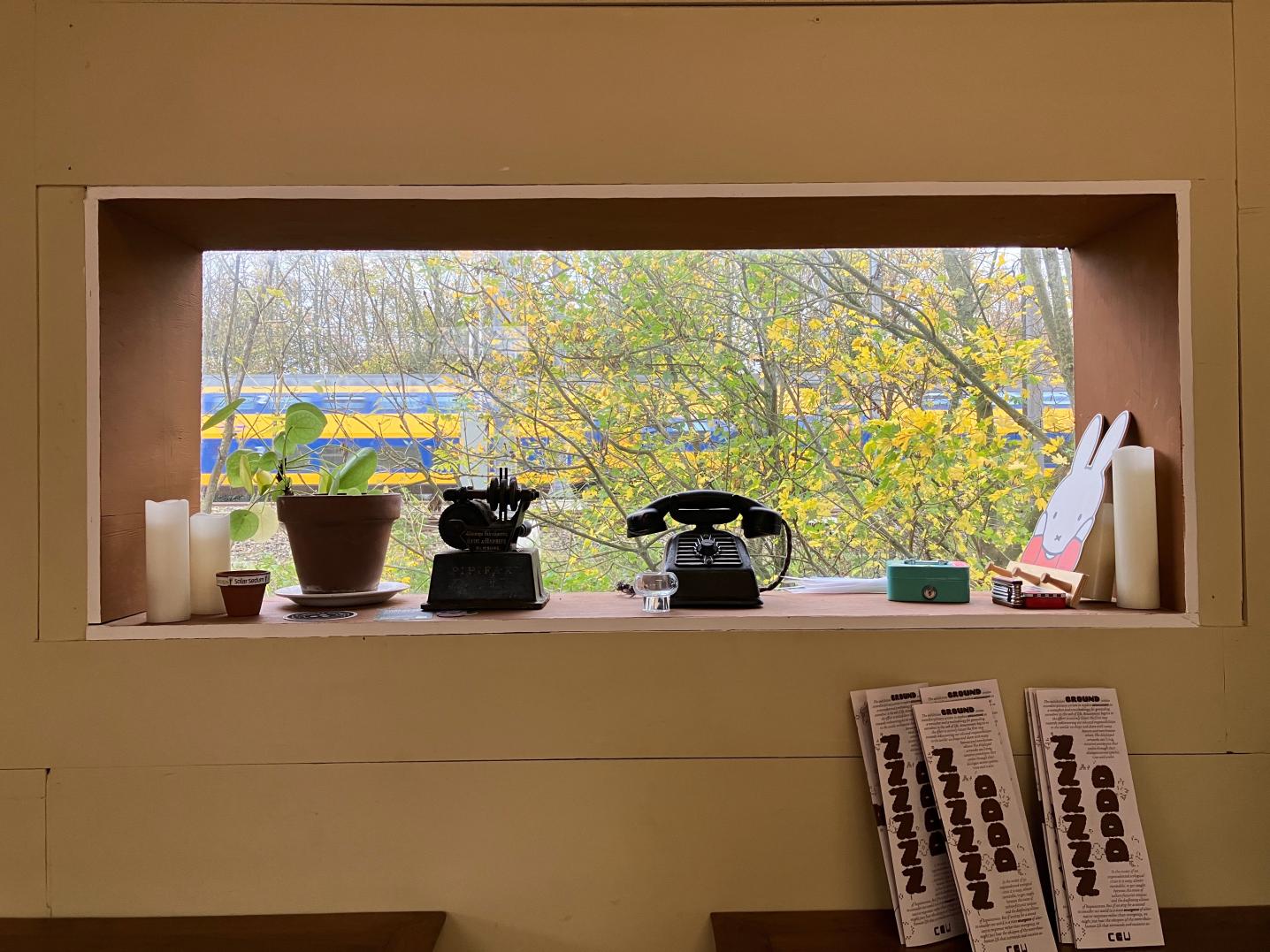
The word Zoöp is short for Zoöperation, cooperation with zoë the Greek word for life, ζωή, It is an organisation form and learning process that incorporates non-human perspectives into decision-making, advancing regenerative practice. The Dutch Zoöp-model was developed at Nieuwe Instituut in Rotterdam, the first Zoöp in the world, and set up the Zoönomic Institut to grow the Zoöp network. Any organisation with an intrinsic motivation to contribute to the health of the ecosystems they are part of, can become a Zoöp and learn how to contribute to the well-being of their multispecies communities.
DutchCulture connects regenerative ideas and practices across borders, enabling people‑to‑people exchanges that are rooted in fairness, mutuality, and shared purpose. In an international context, this means working intentionally with partners to stimulate exchange. Our work has to be locally resonant to be globally relevant: we build networks of artists, cultural workers, and organisations who share the commitment to an interconnected world and a healthy planet.