Search Artists
 Search Disciplines
 Search
Places
Search
Places
Image

Neoplastic demonstration against Russian invasion of Ukraine, Russian Embassy in Warsaw, April 2022.

 Lemming Film de Stilte World Press Photo Spekki Webu Eline Arbo
 Education
 Austria
Turkey
Australia
Stockholm
Vienna
Ibiza
Austria
Turkey
Australia
Stockholm
Vienna
Ibiza
Following the fall of communism in 1989, Poland’s cultural infrastructure was reshaped with a strong civic and European orientation. Cities became important engines of cultural innovation: Warsaw drew comparisons with Berlin, Wrocław was European Capital of Culture in 2016, and Lublin will hold the title in 2029.
Under the Law and Justice (PiS) government from 2015 to 2023, cultural institutions came under increasing political pressure, and cultural narratives were often connected to conservative and nationalist agendas. The change of government in 2023 brought renewed expectations for a more open and plural cultural landscape. Since then, there has been new energy in the sector, with artists and institutions exploring possibilities for dialogue, institutional renewal and international collaboration.
At the same time, Poland remains in a complex political transition. A new overarching cultural policy is still developing, while reforms continue to face political and institutional limits. This makes the current moment both promising and uncertain. For international partners, it offers opportunities to connect with a cultural field that is ambitious, engaged and actively redefining its role in society.
The Netherlands and Poland share a rich cultural history. Dutch Mennonites settled in Poland from the 16th century onwards, shaping parts of the Vistula landscape. Trade connected the Baltic and the Low Countries from as early as the 15th century. During the Second World War, the First Polish Armoured Division helped liberate parts of the Netherlands, while many Dutch citizens were deported to German concentration and extermination camps in occupied Poland.
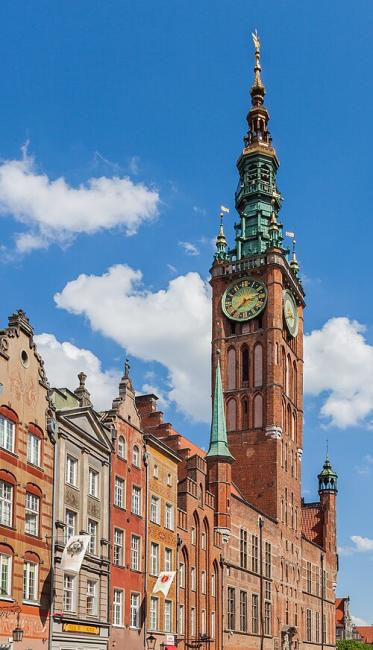
The architectural legacy of Tylman van Gameren, the carillons of Gdańsk, and ongoing museum collaboration are all part of a broader cultural landscape that continues to connect the two countries.
The Dutch embassy in Warsaw will continue to support artistic exchange and the visibility of Dutch culture in Poland. Key focus areas for Dutch artists, creatives and cultural entrepreneurs include the performing arts, film, heritage, design and creative crossovers.
The embassy is also committed to cultural projects that commemorate shared history. This includes the role of General Maczek’s division in the liberation of the Netherlands and the memory of Dutch victims in Sobibór and Auschwitz. These projects not only honour the past, but also strengthen mutual understanding today.
The rich shared heritage between the two countries extends beyond wartime history. From early Dutch settlers to the architectural influence of Tylman van Gameren and the legacy of Marianne van Oranje, this historical depth provides fertile ground for museum and institutional partnerships.
Creative crossovers that connect culture with sustainability, technology and science are also encouraged, particularly when they engage younger generations. As Poland continues to modernise, there is growing interest in circular design, digital innovation and culture-driven urban development. Dutch expertise in these areas positions the Kingdom of the Netherlands as a valuable partner.
The current transition in Poland may also create new space for cooperation with public institutions, while independent and civic cultural initiatives remain important partners. Projects that support freedom of expression, European solidarity, sustainability and inclusivity are especially relevant in this changing context.
While major cities remain important cultural centres, the embassy is keen to foster local-to-local collaboration in smaller or underserved regions. Special attention for Dutch artists and cultural entrepreneurs is given to Lower Silesia, which was heavily affected by floods in 2024.
There is also a focus on Lublin and its surroundings, in light of the city being named European Capital of Culture 2029. Engagements in the lead-up to 2029 could offer Dutch cultural professionals a strategic platform to expand visibility, collaborate internationally and co-develop new cultural models.
The Embassy of the Kingdom of the Netherlands in Warsaw plays a vital role in supporting Polish-Dutch cultural collaboration. It facilitates artistic exchange, funds strategic cultural projects and serves as a connector between Dutch creatives and Polish institutions.
In its work, the embassy prioritises values-driven collaboration, including freedom of expression, European solidarity, sustainability and inclusivity. Whether through heritage partnerships, film programming, local cultural initiatives or cross-disciplinary exchange, the embassy remains committed to a resilient and future-focused bilateral cultural relationship.
Want to know more about opportunities for cultural exchange with Poland? Check the links, FAQs, infographics and activities on our website. If you have any questions, feel free to contact our advisor for Poland via our Advice Desk.