Search Artists
 Search Disciplines
 Search
Places
Search
Places
Image
Image

Role
Advisor for Hungary, Poland, Ukraine & Turkiye
Email
t.stepanovic [at] dutchculture.nl

 Oorkaan Joris Teepe Volya Films Epica de Stilte
 Education
 Switzerland
Austria
Netherlands
Amsterdam
Barcelona
Melbourne
Switzerland
Austria
Netherlands
Amsterdam
Barcelona
Melbourne
Hungary’s historic 2026 election brought an end to Viktor Orbán’s 16 years in power, as Péter Magyar’s TISZA party won a two-thirds parliamentary majority. For many, the result marks the end of a long political era, while also opening a period of major uncertainty about what change will look like in practice. In this context, we were curious to hear how local cultural professionals see this moment, and what they hope it could mean for Hungary’s cultural sector.
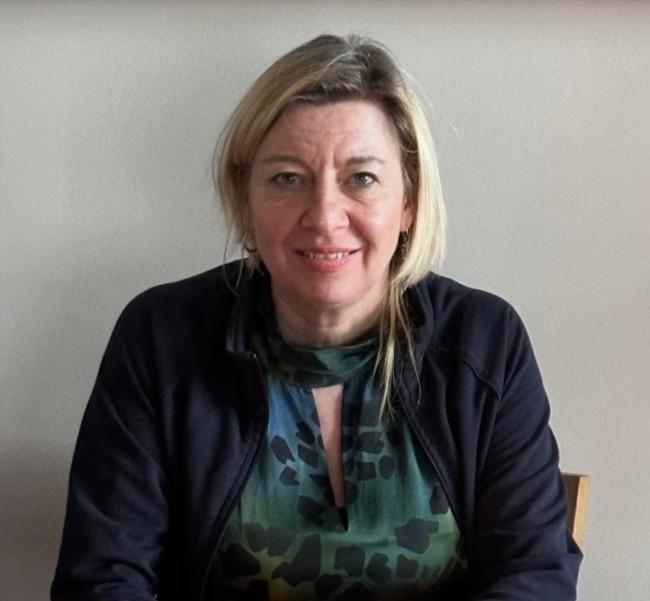
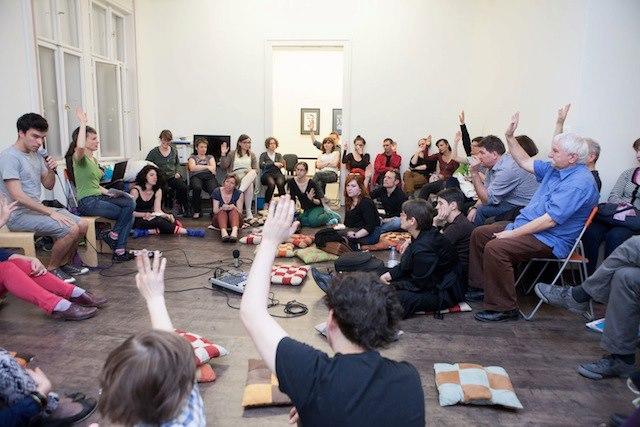
Dóra Hegyi is an art historian, curator, and director of the critical art program tranzit.hu - which is a member of the Central and Eastern European network tranzit.org - for 20 years. Tranzit creates platforms for discursive, non-formal educational, research, and publication projects, and initiates collaborations on both international and local levels. The organisation funded Lehetőségek tere (Space of Opportunity) in 2019 to create an art and community space for common learning and experience and cross-generational encounters.
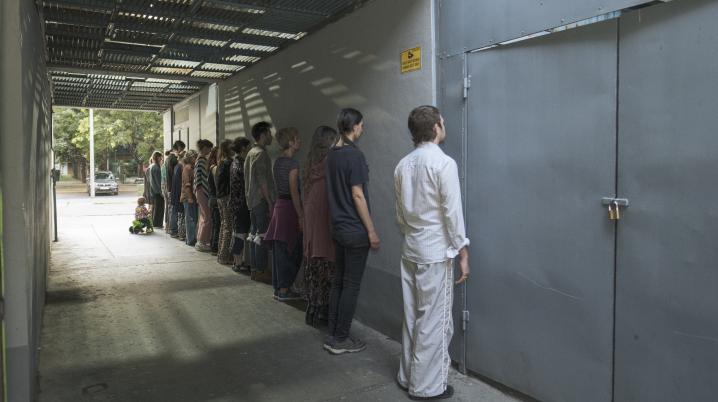
Our activity became explicitly political. In 2013-14 tranzit.hu initiated the so-called Action Days, which gathered the whole contemporary art scene, from artists to curators, museum people and collectors, which was a direct democratic platform to form coalitions to stand up against the anti-democratic decisions in cultural life.
This group of people previously occupied the stairs of the Ludwig Museum for two weeks and tried to negotiate with the Ministry of Culture to prevent the change of the director on political grounds. We were also demonstrating against the takeover of the cultural institutions (as the Kunsthalle or the Pesti Vigadó) by a newly founded government-close and government-financed public body, the Hungarian Art Academy. These were strong, but they did not bring change at those points. The people lost their enthusiasm and energy after a while. We, along with many others, became a massive opposition without means.
Cultural policies not supporting progressive art made the civil society function of cultural life very strong; besides the human rights organisations, the non-state-funded and internationally funded cultural organisations became the critical eye of the system, taking over the role of brakes and counterweights. Many underground initiatives and community spaces offering alternative views and critical thinking grew in the last 10 years, supporting democratic values and providing a reality check against the political propaganda of the government.
It is very important that the National Cultural Fund will be reorganized and will hand out budgets in a just way and also based on meaningful calls. Budgets need to be increased, scholarships rethought and first of all juries changed to represent all. Besides that, I would claim as soon as possible to dissolve the Hungarian Art Academy as a public body and reshare its budget to the National Cultural Fund.
The problem is that this public body received many important buildings, which have large budgets and large budgets to employ people for non-transparent tasks; these budgets and the use of these valuable properties have to be given back to the common.
We also started an initiative with some independent and progressive art organisations to come up with a list of claims and suggestions to the cultural politics of the new government.
Hopefully the redistribution and increase of cultural budgets. To make culture available for wider publics, not only elites. To support experimental art formats in all branches. Not to overfinance some large institutions, such as the Museum of Fine Arts-Hungarian National Gallery or the House of Music, while leaving others to function on small or non-existent budgets.
Hungary should use contemporary culture as an important means to appear internationally.
We need patience and time ourselves. Culture will not be the first sector the new government will solve. We all will continue to work critically and show systemic problems. Hungarian society also needs to heal, projects supporting mental health and reconciliation will be important. We did not speak to each other for a long time with the other side (the Fidesz voters) of society. They are blinded and we need to try to support their reality check, tolerance, open-mindedness, and belief in democracy and Europe, which was taken from them. This won't be easy, also Péter Magyar is a conservative politician, so culture and civil society will still be the territory, where issues in their relevance can be spoken out and shown.