Search Artists
 Search Disciplines
 Search
Places
Search
Places
Image
Image

Role
Advisor for Hungary, Poland, Ukraine & Turkiye
Email
t.stepanovic [at] dutchculture.nl

 Naomi Voet Lemming Film Nederlands Dans Theater Florentina Holzinger Blasterjaxx
 Education
 Portugal
United States
Turkey
Las Vegas
Stuttgart
Tokyo
Portugal
United States
Turkey
Las Vegas
Stuttgart
Tokyo
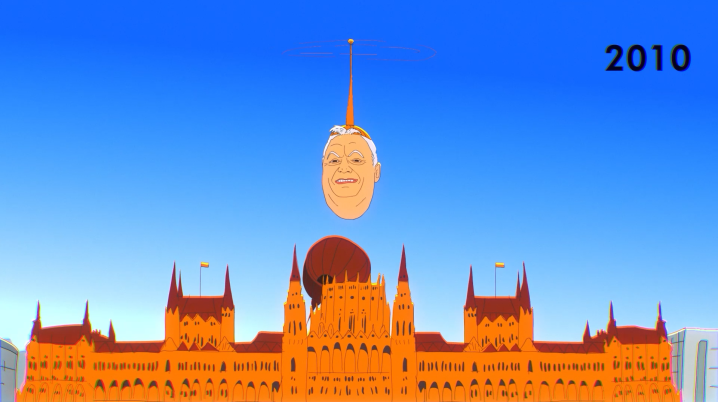
Hungary’s historic 2026 election brought an end to Viktor Orbán’s 16 years in power, as Péter Magyar’s TISZA party won a two-thirds parliamentary majority. For many, the result marks the end of a long political era, while also opening a period of major uncertainty about what change will look like in practice. In this context, we are curious to hear how local cultural and media professionals see this moment, and what the hopes are for Hungary’s cultural sector.
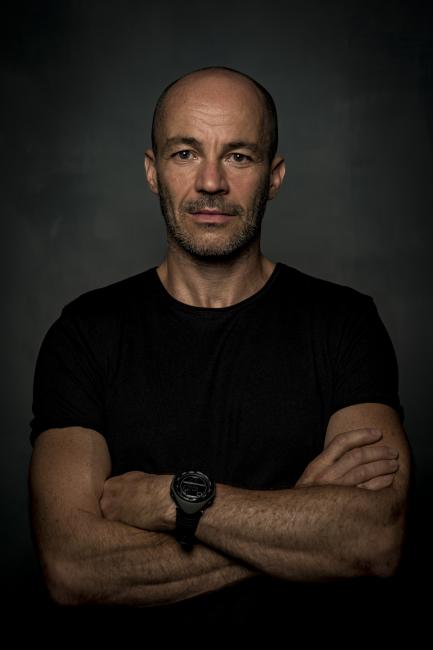
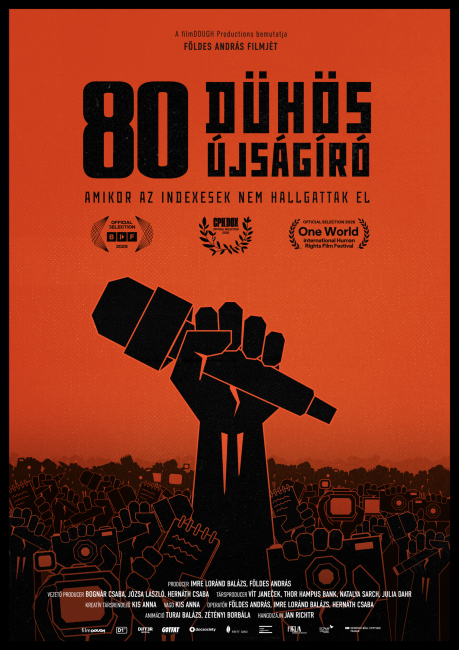
In this interview, we talk to András Földes, a Hungarian journalist. He co-directed, together with Anna Kis, the documentary 80 Angry Journalists, which was screened several times at the 2026 Movies that Matter Festival in The Hague. The film follows the political takeover of Index.hu, one of Hungary’s most prominent independent online news outlets, and the collective resignation of 80 journalists as they try to rebuild independent journalism from scratch.
"In reality, free media had almost no relationship with the government at all. Government offices did not respond, and it was nearly impossible to interview important political figures, ministers, or even the prime minister. This created an absurd situation in which journalists had to act almost like commandos, running after public officials with microphones in hand just to get a single answer on matters of public importance.
At times this produced almost comical scenes, though in fact they were deeply troubling. For anyone outside Hungary, it may be hard to imagine that government figures — even the prime minister — would literally run away from journalists, or that bodyguards would push aside reporters, and that all this had come to be seen as normal."
"At the same time, journalists were also targeted by smear campaigns in propaganda media. For instance, my name appeared all over the propaganda media as someone who supposedly represented fake news. There was not only institutional exclusion, but also constant psychological pressure. It was a complex system designed to weaken and eliminate the free press, while flooding the Hungarian public sphere with government-produced disinformation.
The media landscape was shaped by a huge imbalance. Roughly 80 to 90 percent of Hungary’s media is controlled by Fidesz, directly or indirectly, but that does not reflect actual readership. More than half of the people who read news still turn to independent media. The market was heavily distorted by state advertising and political control. Pro-government outlets did not have to fight for revenue in the same way, while independent media had to rely on subscriptions and paywalls. This led to the very sad situation in which fake news was free, while independent media had to rely on paywalls."
"It is truly a historic moment. Even as a journalist, I did not expect that Fidesz could be defeated, so this result came as a huge surprise. I think it is a turning point for Hungary. Had this not happened, the future would have been very difficult not only for me as a journalist but for the whole country. Hungary was facing something deeply troubling."
"It felt like a carnival. In that sense, too, it was historic: I had never before seen Hungarians celebrating together in the streets the way I witnessed that night."
"As I said, I did not expect such a huge victory, so I had not really allowed myself to form expectations. Even now, it is difficult to imagine changes on this scale actually happening. Still, one of the most urgent tasks is to end the capture of the public broadcaster. Its entire structure, including the editorial staff, should be changed so that public media can begin to provide factual news rather than propaganda."
"It would also make a major difference if state-owned companies stopped advertising in ways that distort the media market. This has been a politically skewed system, one that has heavily favoured pro-government media. If this practice ends, the market could become more balanced, which would also improve the conditions for free media. Another important change would be the restoration of a normal working relationship between the state and journalists. If government institutions and ministries begin answering questions again, and if there is proper cooperation between the media and public authorities, that alone could help create a much healthier media environment in Hungary."