Search Artists
 Search Disciplines
 Search
Places
Search
Places
Image
Image

Role
Advisor for Hungary, Poland, Ukraine & Turkiye
Email
t.stepanovic [at] dutchculture.nl

 Sasha Dees Production & Management Angerfist Teatro Pavana Simone Lamsma HH Producties
 Education
 Australia
Austria
Italy
New York
Seoul
Milan
Australia
Austria
Italy
New York
Seoul
Milan
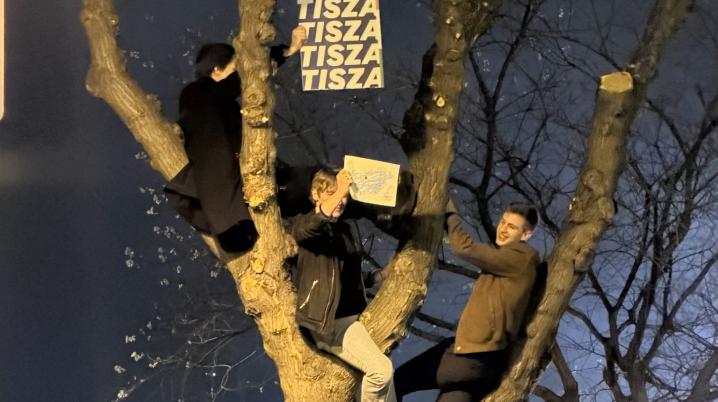
After TISZA’s sweeping victory in Hungary’s 2026 election, it is worth taking a closer look at what the party is actually proposing for culture. We reviewed TISZA’s cultural plans because, with a two-thirds parliamentary majority — not just a simple majority, but enough to change key laws and reshape institutions at a structural level — the party has far greater room to influence the cultural field, media landscape, and public governance than an ordinary incoming government would. This is especially relevant in the Netherlands, as Hungary is one of the focus countries of the Dutch international cultural policy for 2025–2028, and because the Dutch embassy in Budapest works from a clearly defined cultural vision for collaboration between the two countries. For international cultural partners, TISZA’s programme is therefore not only a domestic policy text, but also an early indication of how a new Hungarian government may seek to reposition the country culturally and politically after 16 years of Orbán-era rule.
In broad terms, TISZA presents culture as a field damaged by political control, ideological pressure, unstable funding, and weakened institutions. Its answer is a reset built around depoliticisation, professional autonomy, and predictability: restoring the independence of the National Cultural Fund and the National Film Institute, rebuilding boards on a professional basis, stopping politically motivated relocations, and reviewing post-2010 foundations and agencies. The programme is strongest where it addresses governance, funding structures, salaries, and institutional credibility. It reads, above all, as a reconstruction plan after a long period of centralisation and political capture.
What stands out most regarding internationalisation is the emphasis on cultural diplomacy and international presence. TISZA proposes to strengthen cultural diplomacy, bring the Liszt Institutes (Hungarian Cultural Centres) and related lecturer and visiting-professor networks under clearer professional supervision, and build a long-term Hungarian cultural export strategy. It also promises to expand international reach, address foreign cultural audiences more consciously, and support the international success of Hungarian film and other art forms. This suggests a government that wants Hungary to become more visible abroad again through culture, and to reconnect with Europe not only politically but symbolically and institutionally as well
At the same time, the programme’s international dimension appears more focused on representation than on exchange. It says much more about projecting Hungarian culture abroad than about reciprocal collaboration, co-creation, mobility, residencies, knowledge exchange, or long-term participation in shared European cultural ecosystems. It feels closer to cultural representation than to international cultural cooperation.
More broadly, the programme remains institution-heavy: it is detailed on heritage, film, theatres, boards, and funding systems, but says relatively little about contemporary artistic practice itself — experimental work, interdisciplinary scenes, artist-run initiatives, digital culture, or new forms of cultural production.
In the programma there is a strong attention to regional cultural life. TISZA wants to renovate community cultural centres, revive local cultural life, and make culture more accessible beyond the metropolitan circles. That is promising, especially in a country where cultural centralisation around Budapest has long been a concern. It remains to be seen whether this means stronger local autonomy, support for small independent spaces, new local leadership, or mainly redistribution from the centre. A similar ambiguity surrounds participation. The programme clearly supports broader access to culture, but it says less about participation as co-creation, shared ownership, or structural involvement of communities in cultural decision-making.
Another striking feature is the strength of the labour agenda. The programme promises a 25% general wage increase for cultural workers, a more predictable salary path, housing support, and a clearer annual timetable for grants. Those are serious and overdue commitments. But they also mean the document sometimes feels more like a public-sector stabilisation plan than a fully articulated artistic vision. It is very strong on depoliticising governance; less explicit on how artistic freedom, dissent, controversy, and critical culture would be protected in practice. It is also more focused on repairing institutional damage than on future-facing themes such as digital transition, green transition in culture, international artistic mobility, or new cultural entrepreneurship.
Taken together, TISZA’s cultural agenda offers a promising starting point. Its clearest strengths lie in depoliticisation, institutional repair, regional access, and professionalisation — all of which could help create a healthier and more reliable foundation for the cultural sector. At the same time, some areas remain less developed: internationalisation is framed more as projection than collaboration, and contemporary culture is not yet fully articulated. For international partners, however, the programme is encouraging as a sign of reopening and renewed possibility. It points toward a more stable, less politically distorted framework for cooperation, while also leaving space for an important next step: shaping not only the repair of Hungarian culture, but a more contemporary, collaborative, transparent and plural cultural future.