Search Artists
 Search Disciplines
 Search
Places
Search
Places
Image
Image

Role
Advisor for Belgium, France, Germany & the United Kingdom & Interim Advisor for Italy & Spain
Email
a.moerk [at] dutchculture.nl

 Herman van Veen Andrea Hackl André Rieu KI/KI Joris Teepe
 Education
 Switzerland
United States
Italy
Ibiza
Stockholm
New York
Switzerland
United States
Italy
Ibiza
Stockholm
New York
Our Germany advisor Astrid spent a month in Munich discovering the cultural landscape, talking to cultural professionals and visiting interesting cultural spaces. DutchCulture would not want to withhold this useful information from you, which is why we share some knowledge and tips in our article series Postcards from Munich. In this article, Astrid interviewed Simone Schulte-Aladağ and Tina Meß from Tanzbüro München about the (independent) dance scene in Munich.
We are a platform providing information and resources for the dance scene in Munich, funded by the Department of Culture of the City of Munich. By engaging in cultural policy work, we aim to contribute to the improvement of the working conditions for the local contemporary dance field and to greater national and international visibility. We have a large network and knowledge of Munich, as we work with many players in the city. We get requests from local professionals, but also people outside of Munich wondering what the scene is like here, and which funding and entry opportunities there are. We offer information via individual advice, workshops, the newsletter, our funding database and the information on our website on the dance scene in Munich.
The dance scene in Munich is not as big as in Berlin, for example. Nevertheless, there are several artists who get funded, do exciting work and tour internationally. For example, there is the choreographer Anna Konjetzky, who runs a project called Playground. She has her own small space, where she organizes different discursive sessions and offers activities open to everyone. There is Moritz Ostruschnjak, who tours a lot and combines many elements from urban dance and media-related themes. Thirdly, there is Ceren Oran, who works for young audiences and often collaborates with live musicians and aims to reach out for a wider audience.
At the same time, there is a large young scene slowly finding its place and trying to establish itself. Many of them may not yet receive much funding, but they are exploring and developing their own formats. There is a professional training program called Bad Lemons Professional Training, initiated by choreographer Jasmine Ellis. There is Tanzquelle, initiated by David Russo, offering open workshop formats and improvisation sessions. At the moment, we experience the scene as quite exciting and diverse. People are exchanging more with each other and supporting each other, compared to back in the days. Younger artists are keen on engaging in dialogues, discussing ideas, and positioning themselves.
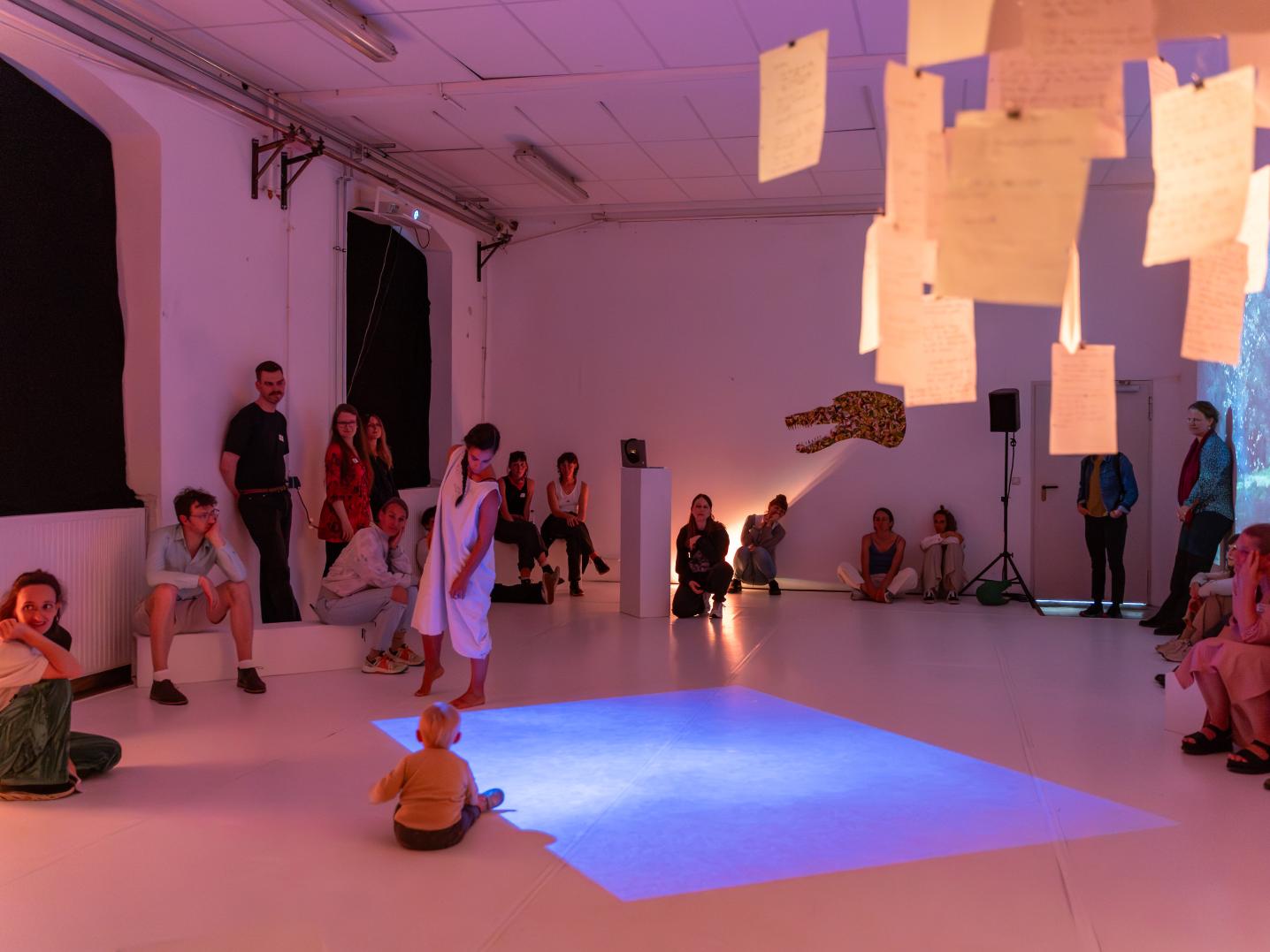
The problem in Munich is that we simply don’t have enough spaces. Especially rehearsal spaces are expensive and quite rare. We don’t have our own dedicated dance house for the independent scene either. In fact, there are hardly any suitable venues at all, except for HochX and the schwere reiter, which programmes also music and theatre. Overall, it is challenging in this city. However, every two years, the international Dance Festival and the Spielart Festival take place, as well as THINK BIG! Festival, presenting dance for young audience and the yearly format Tanzwerkstatt Europa, offering many workshops and a performance program.
Then there is Fokus Tanz, since 20 years integrating dance into schools and kindergardens, and running many exciting education projects. Fokus Tanz also initiated a dance for young audiences-program here, called explore dance. Being part of this Germany-wide network, they produce own work and perform in schools and in theaters.
In general, there is a lot happening in the field of community dance, also on the level of inclusion. Some colleagues organize community dance events, many of which are now connected to major cultural institutions such as the Münchner Kammerspiele and the Kulturzentrum Gasteig. There is a growing recognition that dance does not exist only on stage, but also in many other contexts.
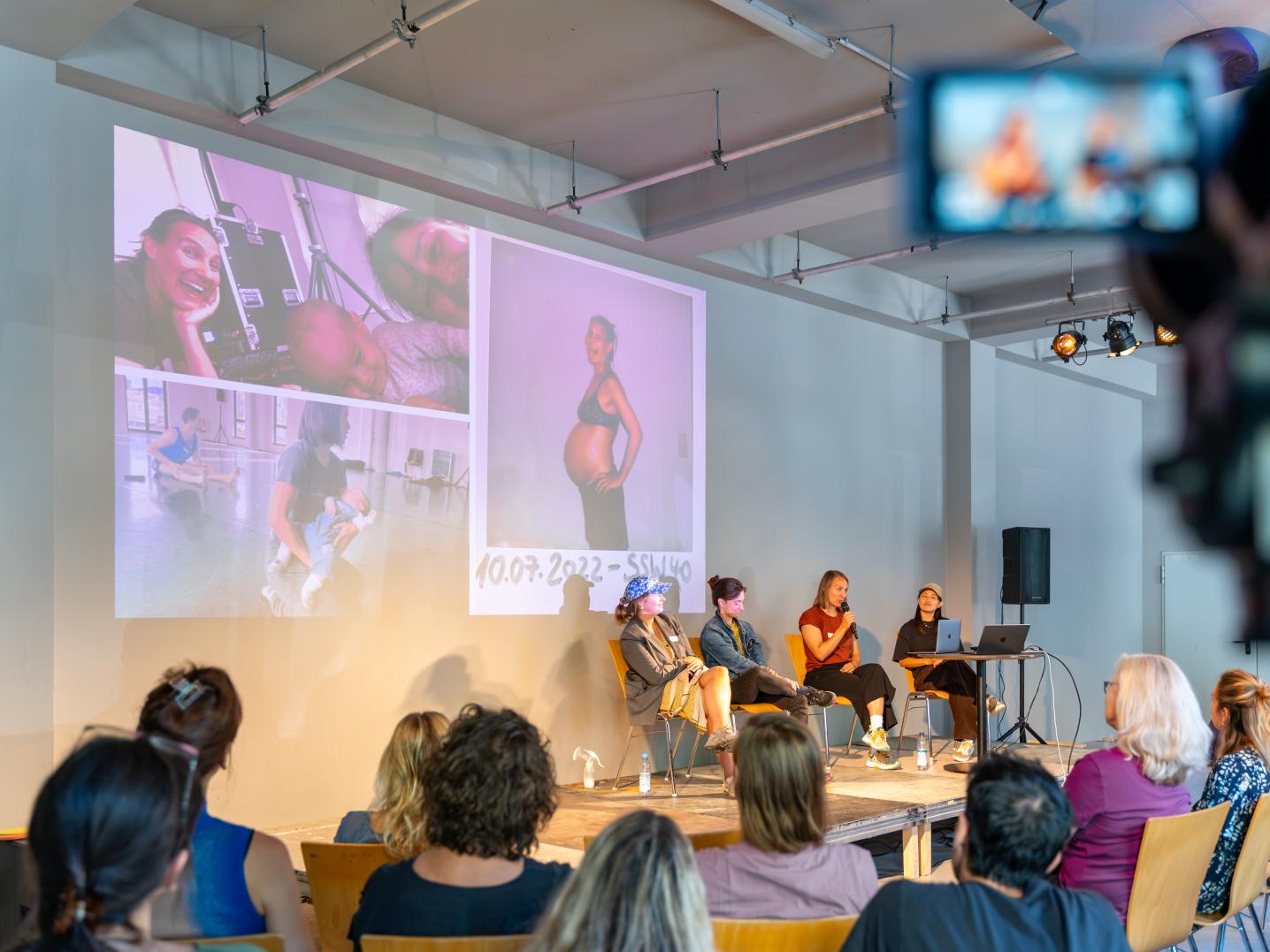
Besides offering an ongoing workshop program and individual consultancies, we recently organised a large symposium on the topic of taking care - dance and parenthood. The participants ranged from the cultural department of the city in Munich, to guests from all over Germany, dance professionals, choreographers and so forth. We facilitate space to address various aspects of the topic. There were also politicians on the closing panel. Overall, it was a larger step towards bringing the issue of the social situation of those working in the dance sector more into the public eye. We also invited PiPA, the organization in the UK that advocates for parents in the performing arts, since they are much further in the academic field in terms of this topic.
Yes, since many years we have carried out a small international exchange program called “Meeting Points”. It is a collaboration with THE WORKROOM from Glasgow. Each time, we select two artists/choreographers from Munich and two from Scotland to meet each other for a week in Munich and a lab week in Glasgow. This paid exchange allows to do research and reflect, without the pressure of having to produce a concrete project outcome. The main goal is to exchange ideas, share practices, and get to know each other's dance scene. We see that the artists continue to benefit from it afterwards, they build their own networks, stay in contact, and sometimes event get invited later for performances or workshops. We are glad to have worked with the Goethe-Institut and the British Council for this project.
Besides this, we are attending many national and international festivals like the Tanzplattform, Tanztriennale and festivals in other countries, as well as IETM-Meetings to stay connected and promote the Munich artists.
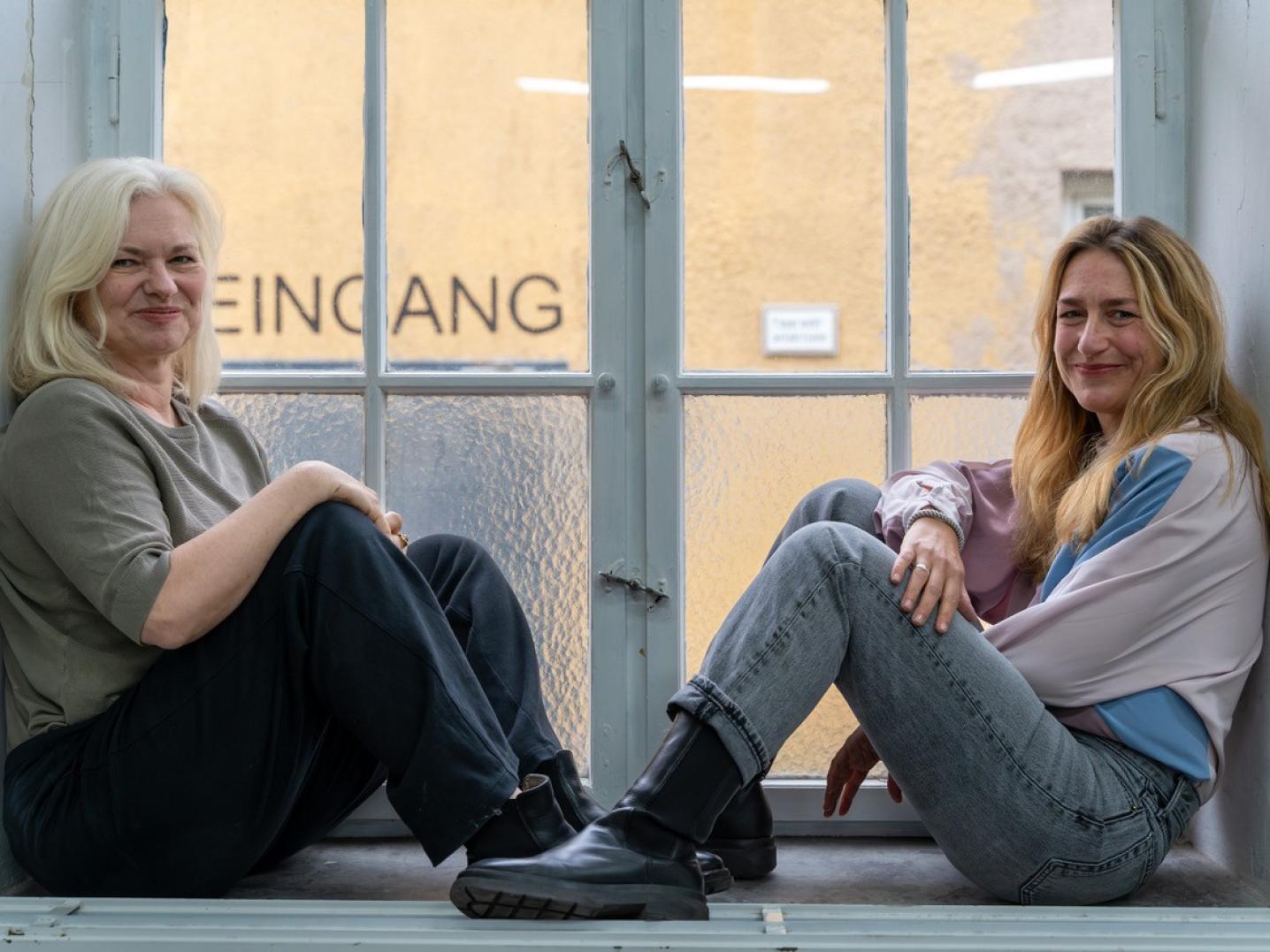
Simone Schulte-Aladağ worked as a dramaturge and production manager for festivals, theater companies and film productions in Munich, New York and Vienna. Since 2006 she has been co-founder of FOKUS TANZ, where she is responsible for artistic development and project management. She is the co-curator of the international biennial festival THINK BIG! - Dance, Music Theater and Performances for Young Audiences. Together with her colleagues Tina Meß and Miria Wurm, she founded Tanzbüro München in 2014.
Tina Meß has worked as a dramaturge, production manager and tour manager for artists of the independent Munich dance scene as well as festivals such as Think Big!, DANCE and RODEO. Since 2015, she has been running Tanzbüro München together with Simone Schulte-Aladag.