Search Artists
 Search Disciplines
 Search
Places
Search
Places
Image
Image
Role
Advisor for Belgium, France, Germany & the United Kingdom & Interim Advisor for Italy & Spain
Email
a.moerk [at] dutchculture.nl

 Will Holshouser Tim Kliphuis Lemming Film Grace Dahl Arthur & Lucas Jussen
 Education
 Netherlands
China
Italy
Manchester
Ibiza
Shanghai
Netherlands
China
Italy
Manchester
Ibiza
Shanghai
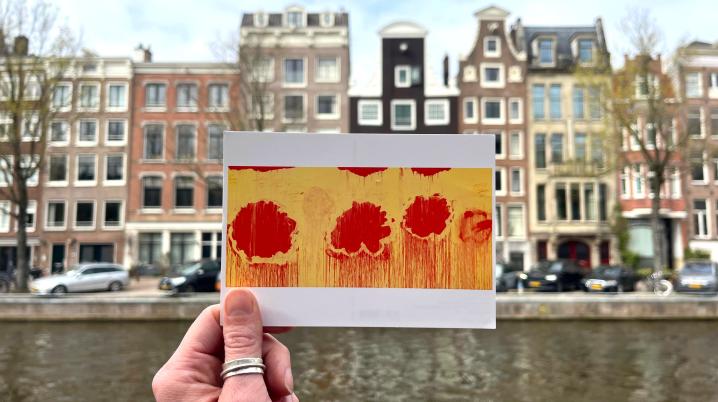
Our Germany advisor Astrid spent a month in Munich discovering the cultural landscape, talking to cultural professionals and visiting interesting cultural spaces. DutchCulture would not want to withhold this useful information from you, which is why we share some knowledge and tips in our article series Postcards from Munich. In this last article, Astrid interviewed Anna Donderer, Laura Martegani and Tabea Hopmans from Theaterbüro München about the independent theatre scene in Munich.
''We are a consultation centre specializing in theatre and performance, and we advise artists in Munich, who are carrying out projects here, want to submit funding applications, or are looking for guidance on legal and production-related matters. Each year, we organize around eight to nine workshops on various topics. We always offer the possibility for people to come to us with their questions. We provide consultations for makers who want to realize their projects, either in one-on-one meetings or group sessions.''
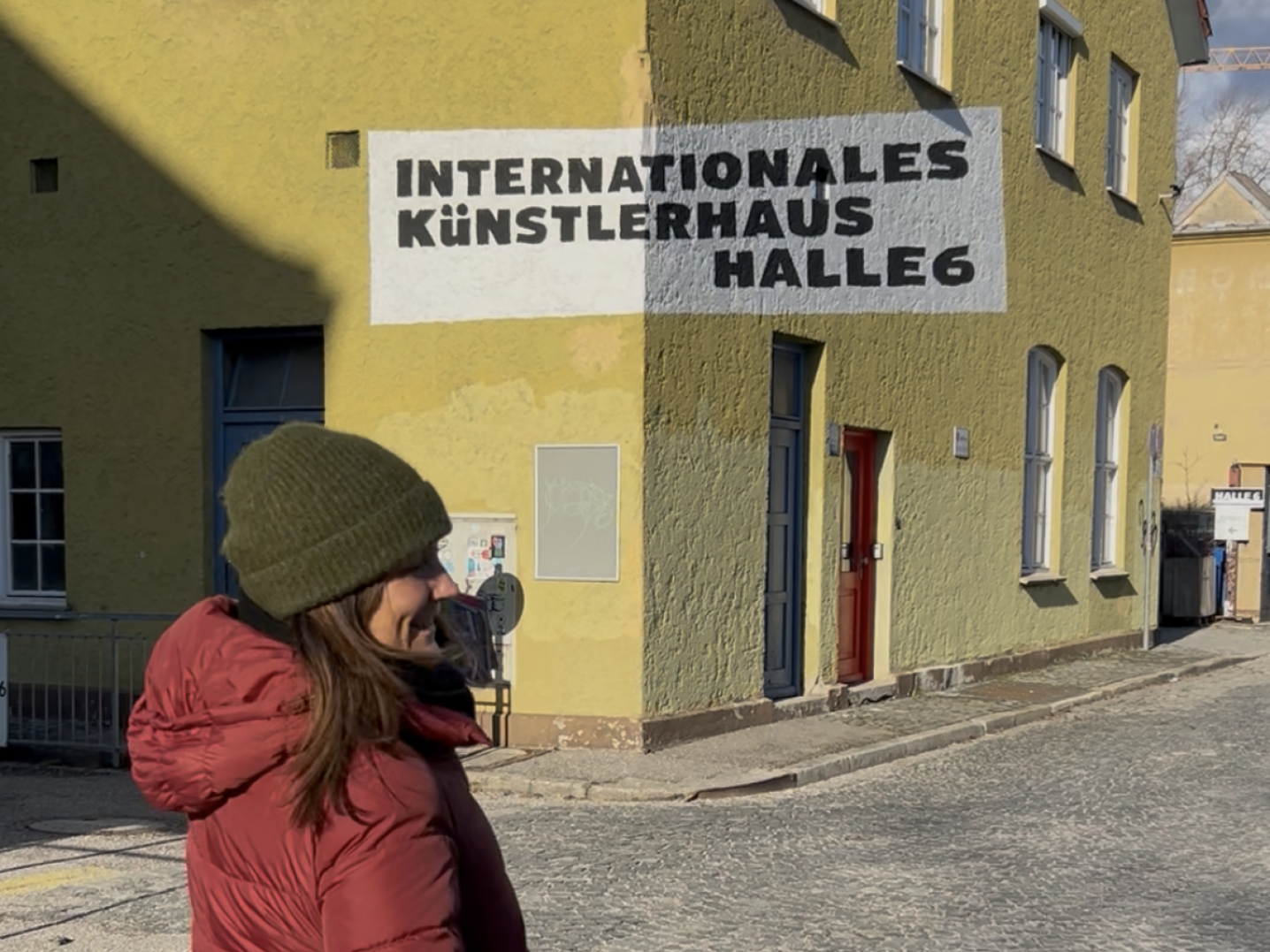
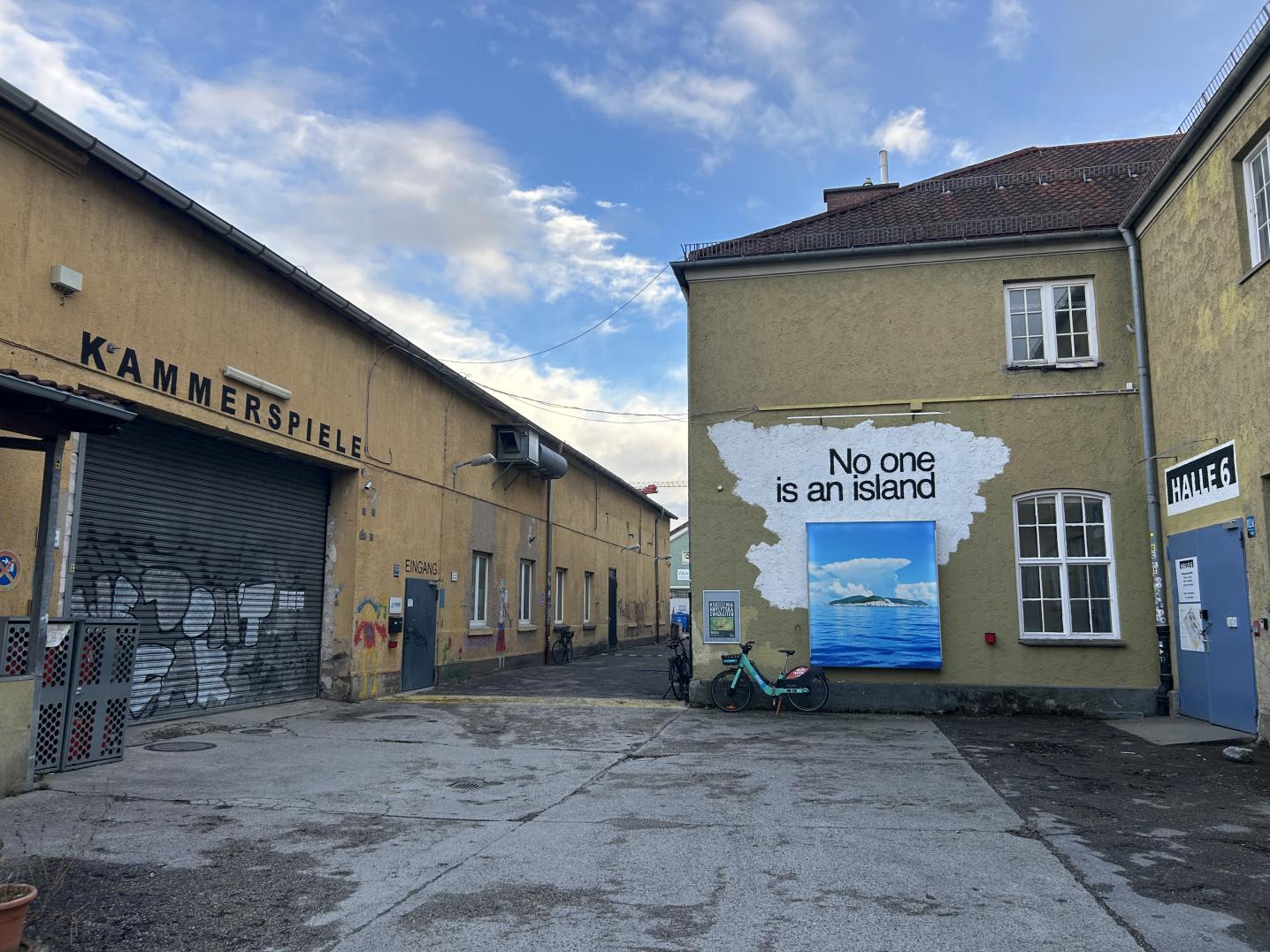
''We advise people, who move here or stay here for a certain period of time and want to build networks or understand how things work here, where they should go and which people they should get to know. Of course, international makers can also contact us. In that case, we create a list or arrange a meeting and try to help them move forward as best we can. Most of the time, we can estimate quite well which theatre maker might be a good fit and which places could be interesting for them. It’s not just about the three main independent theatres (schwere reiter, Pathos, HochX), but also about art spaces like Lothringer 13 or even larger institutions. In those cases, we can also say 'Hey, this might be something that the Kammerspiele would find interesting, why don’t you ask this or that person?'. We know the profiles of the institutions or the interests of their directors, so we can somewhat estimate where it might be most worthwhile to reach out first. We find this job so wonderful, because it has to do with fairness, simply giving all kinds of people the same foundation of information.''
''In Berlin, you have HAU Hebbel am Ufer, in Hamburg the Kampnagel and in Frankfurt the Mousonturm. These are venues that have a production budget and can offer money to theatre makers. And that doesn’t really exist here. All the smaller venues here in the Kreativquartier, like Pathos or schwere reiter, have enough funding to maintain their infrastructure, but they can’t provide additional financial support to artists besides that. The scene is not part of that circle where you gain visibility through presence at an international production house. International work here is always very project based. The city of Munich can support productions, but there is no established structure for internationalisation, you always have to be a bit inventive. Moreover, it's quite courageous as an artist not to go to the coolest hotspot in the world, but instead to create something in a city where tradition still exists alongside modernity. Everything you do here somehow has a meaning directly in relation to the city’s society or the wealth that surrounds you, while you yourself are working in a precarious field. I find that special here, I have the feeling that creating something here is very meaningful.''
''We have three larger festivals, namely Spielart, DANCE, and Tanzwerkstatt Europa. These are essentially the three initiatives that have the possibility to bring international makers from abroad to Munich and present their works here.''
''One topic that has become more important in recent years, especially through a collective that is now working here, is accessibility, specifically artistically integrated accessibility. Several artists have started to engage with this. For example, there is a group called name of group Rykena/Jüngst that works in Hamburg and Munich, and years ago they began developing artistically integrated audio description in their contemporary dance pieces. That’s quite innovative and it inspires other people. In addition, the topic of sustainability is mainly an issue for venues, because they can have the biggest impact. Several places have started creating climate balance reports to find out where they can make changes. For the groups themselves, it’s less of a topic. For us, that’s totally understandable, because they work with such limited resources that they are already quite sustainable. They use second-hand materials and existing resources. The CO₂ emissions of these groups are basically negligible. But the larger institutions are increasingly focusing on sustainability. Then, interdisciplinary art is actually very difficult, because there is no suitable funding for it. That’s a real problem, since many artists work transdisciplinary. It can’t really grow properly, since the funding is missing. There is also a lot of interest in the digital field and AI, but if the funding isn’t there, how are you supposed to realize these projects? There is also Judith Huber a name of maker here, who works a lot with older people and the topic of aging, and over the last three years she has created many pieces about it. It has been extremely interesting, and some very touching works have emerged from it.''
''If they are visiting, we would recommend watching as much theatre as possible. Really go and check out different places and just dare to say hello, because the scene here is quite manageable. It’s totally fine to start a conversation with someone and introduce yourself. In October, the Rodeo Festival takes place every two years. It’s the festival of Munich’s independent scene, and we would recommend coming then, because the whole scene will be gathered there. Over five to six days, around ten performances are shown, plus side programming, and you can really meet everyone. Attending festivals is of course the very best thing to do, it’s an investment that’s worth it. Whether someone pays for it or not, book the hotel and the trip, invest in yourself, and just spend time at the festival, because that’s where you see the most amazing work and meet the most amazing people.''
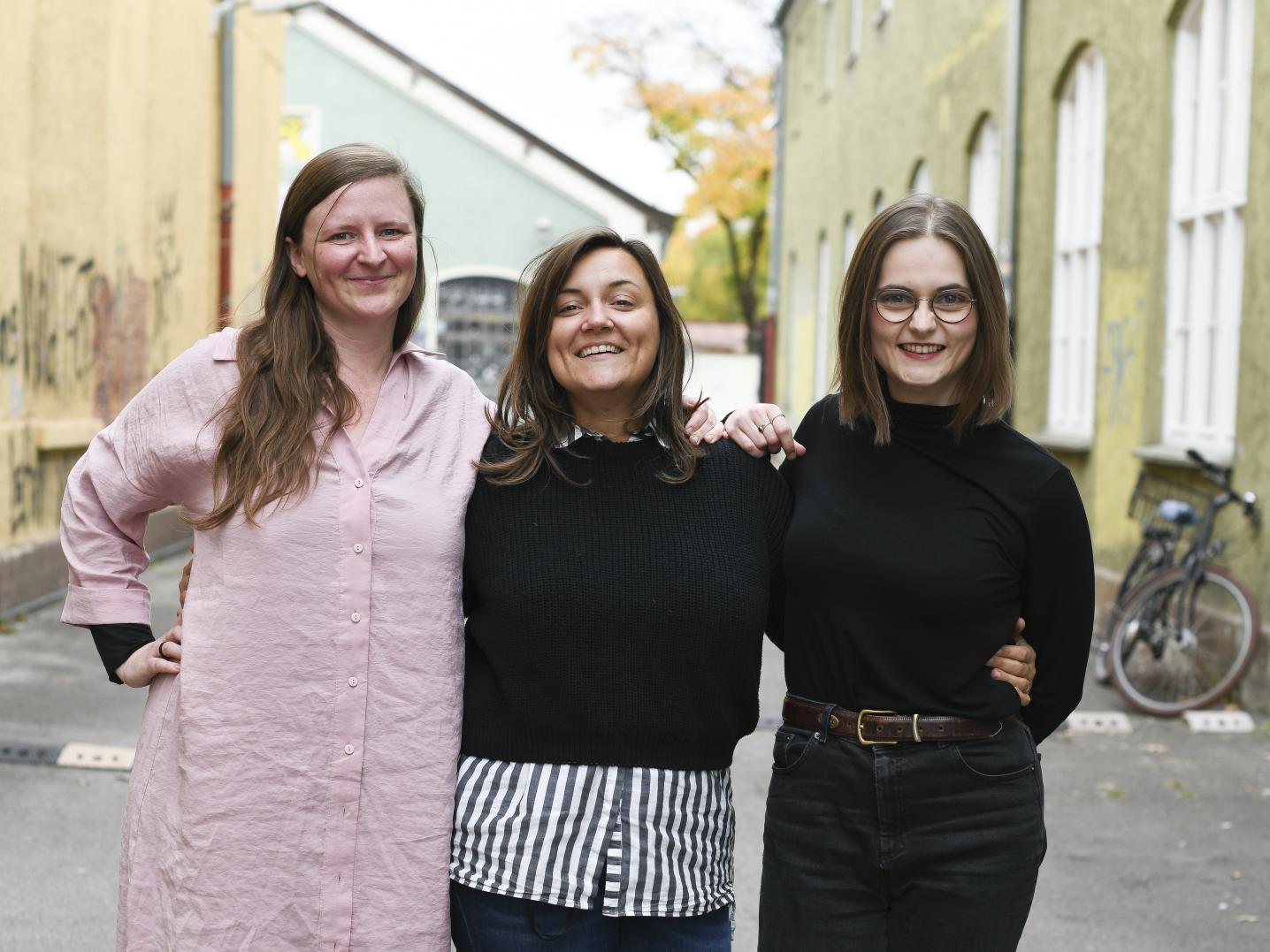
Anna Donderer works as an artistic production manager, dramaturg and curator at Rat & Tat Kulturbüro. To ensure as many people as possible are informed, she founded the Theaterbüro München together with Katharina Wolfrum and Laura Martegani. To ensure there is political momentum, she served on the board of Netzwerk Freie Szene e.V. from 2019 to 2021. She is co-curator of the rodeo Festival in Munich for the 2024 and 2026 editions and part of the artistic direction of HochX München in 2025.
Laura Martegani has worked in concert management and for various theatre and music festivals. Since 2010, she has been a regular contributor to Spielmotor München e.V. and is a member of the organising team for SPIELART, Münchener Biennale and DANCE fesival. In 2013, she founded the Rat & Tat Kulturbüro with her colleagues Katrin Dollinger and Anna Donderer, which was responsible, among other things, for organising the Munich dance and theatre festival RODEO in 2014 and 2016.
Tabea Hopmans has been part of the theatre office since March 2020 and supports Anna and Laura in designing, organising and running the workshops; she advises on budget matters, production processes and how to make things happen. In addition to her work at the Theaterbüro, she has been the artistic production manager at HochX Munich since July 2021, where she also strives to support Munich-based artists with their projects.