Search Artists
 Search Disciplines
 Search
Places
Search
Places Blasterjaxx
 Education
 Netherlands





Date: Wednesday, 11 February 2026 | 17:00-19:00
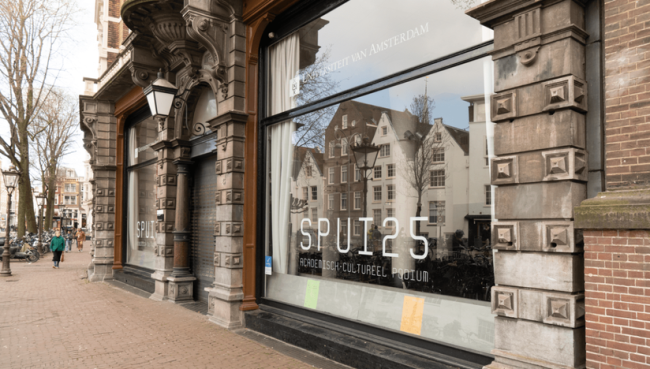
Location: SPUI25 | Spui 25-27 | 1012 WX Amsterdam
Role
As an active member of EUNIC, DutchCulture strongly advocates for fair and reciprocal partnerships in international cultural relations and a values-driven approach. EUNIC Global’s new Strategic Framework 2025–2029 closely aligns with our work on democratisation, culture and climate, and the decolonisation of cultural relations.
In addition, Glenn Micallef, European Commissioner for Intergenerational Fairness, Youth, Culture and Sport, announced in the Culture Compass the delivery of a new EU international cultural relations strategy, leveraging a joint (Team Europe) approach for culture to deepen partnerships worldwide.
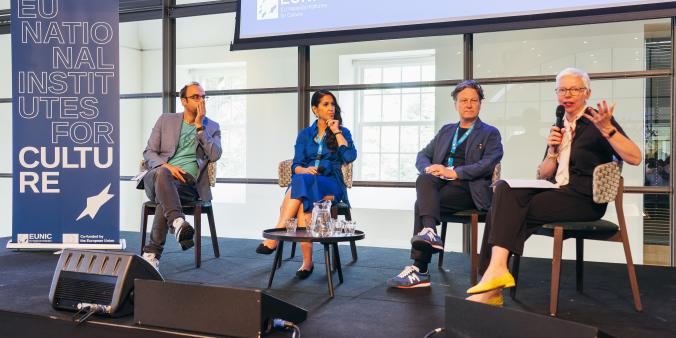
In this evening programme organised by the University of Amsterdam, we learn about what this means in practice. How is European cultural collaboration carried out across the world? What is unique about this way of working and what are challenges in todays global geopolitical landscape?
Programme | 17:00 - 19:00
We will start with a brief historical overview of the EU’s engagement in international cultural relations. This history displays a trajectory marked by change, experimentation, and ongoing uncertainty. Despite the firm belief that culture should become a stand-alone goal for sustainable development, peace and security, several instances have shown that it is also a battlefield dominated by a fight over interests between global, regional and national powers. How to deal effectively with this duality of culture as being both a promise and a threat to international relations? How to envisage a form of international cultural relations that moves away from propaganda and soft power, enabling more inclusive and democratic approaches to culture?
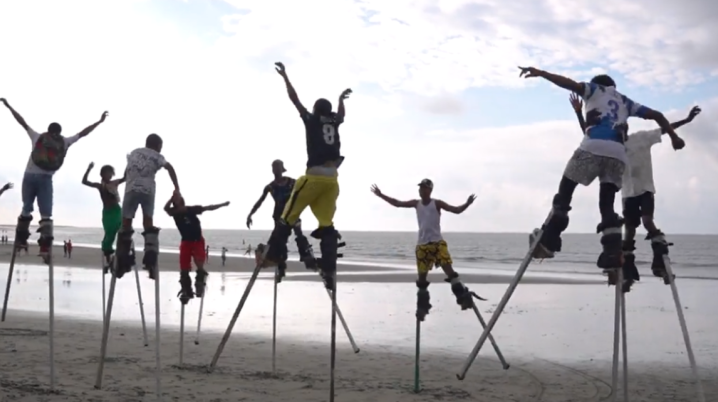
After this historical overview, a short film will be projected, produced by ‘Historias en Kilómetros’, a community-based filmmaking lab based in Colombia. This provides an example of what inclusive international cultural relations could look like, and forms a stepping stone to the discussion that follows. Afterwards, a diverse group of speakers actively working in the field of international cultural relations will discuss the challenges the EU faces today, its key dilemmas, and where its greatest potential lies. How do these different actors see Europe’s role — and what needs to change for culture to truly contribute to a more just and peaceful world?
Speakers
Eugene Downes has served since 2019 in the newly created role of Cultural Director of the Irish Department of Foreign Affairs and Trade, leading the Irish Government’s cultural diplomacy and international cultural relations. In that capacity he is the Irish member of the Heads group of EUNIC (EU National Institutes of Culture). He previously served as Artistic & Executive Director of Kilkenny Arts Festival and as founding Chief Executive of Culture Ireland, the state body for the promotion and advancement of Irish arts worldwide.
Lars Ebert is Secretary General of Culture Action Europe, the political voice of the Cultural Sector in Brussels, and advocates for strong cultural policies in Europe. Previously, he was co-director of H401 in Amsterdam and deputy director of The European League of Institutes of the Arts. Lars has a specific interest in participatory practices and art-based research, holds a postgraduate degree in theology, is a frequent speaker and facilitator, publishes regularly, and serves on the board of various organisations in the areas of culture, education and research.
Lynn Fu is a Shanghai/New York based independent curator and producer. Her career focuses on international collaboration between China, Asia and beyond with her passion in exploring new possibilities of connecting people from different backgrounds through the performing arts. Lynn is an ISPA global fellow, Edinburgh Fringe industry associate and international jury member of the European Spaces of Culture. In 2021, she co-founded Arts Access Shanghai, a platform to increase access to Shanghai’s cultural institutions for the local disability community through connection, education and advocacy.
Aya Kasasa is a specialist in strategic and multi-stakeholder partnerships with expertise in EU and OACPS cooperation frameworks. She previously served at the Secretariat of the Organisation of African, Caribbean and Pacific States (OACPS) in Brussels, where she led the implementation of the ACP–EU Culture Programme and coordinated policy portfolios on migration, urbanisation and demography within the EU–OACPS partnership framework. She currently works as an independent consultant and serves as a jury member for EUNIC’s Spaces of Culture programme.
Claske Vos is anthropologist and Assistant Professor at the Department of European Studies at the Humanities Faculty of the University of Amsterdam. Her current work focuses on the intersection of EU funding, cultural activism, and enlargement. Her expertise is in European cultural policy, cultural heritage, Southeast Europe and European identity formation.
Katz Laszlo (moderator) is a freelance radio reporter for broadcasters including NPR, WNYC’s Radiolab, BBC World Service and the Dutch Public Broadcaster’s Radio 1, and makes The Europeans Podcast.
Role of DutchCulture
Together with EUNIC Global and our partners in DOMO—the European Cultural Foundation, Cultural Emergency Response, and the Prince Claus Fund, DutchCulture supports this programme initiated by our key partner, the University of Amsterdam. Through a two-day interactive workshop, the programme brings together civil society actors, institutions, and cultural professionals to critically assess both the potential and the challenges of international cultural engagement. The aim is to generate shared insights on how civil society can be more meaningfully integrated into EU cultural investments beyond Europe.
The workshop forms part of the Jean Monnet Policy Network (JMPN) ValEUs – Research & Education Network on Contestations to EU Foreign Policy. Bringing together 20 partner institutions from 17 countries across five continents, ValEUs examines the EU’s external action and the pressures on its core values. By convening practitioners working directly in the field, this workshop contributes to the network’s ambition to spark public debate and develop concrete recommendations for both policy-makers and civil society on the future pathways of culture in EU external relations.