Search Artists
 Search Disciplines
 Search
Places
Search
Places Vincent de Rooij
 Education
 Germany

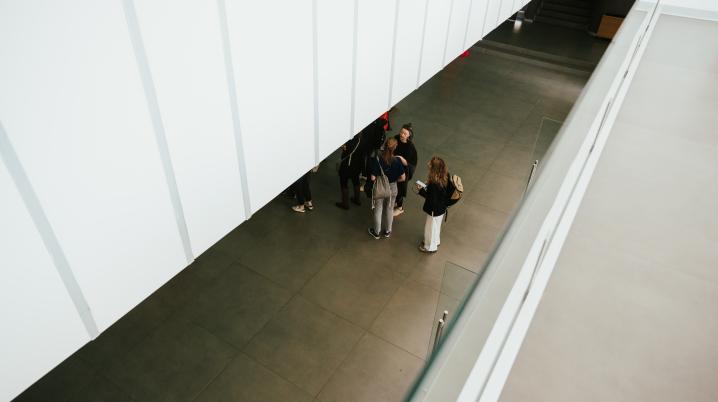
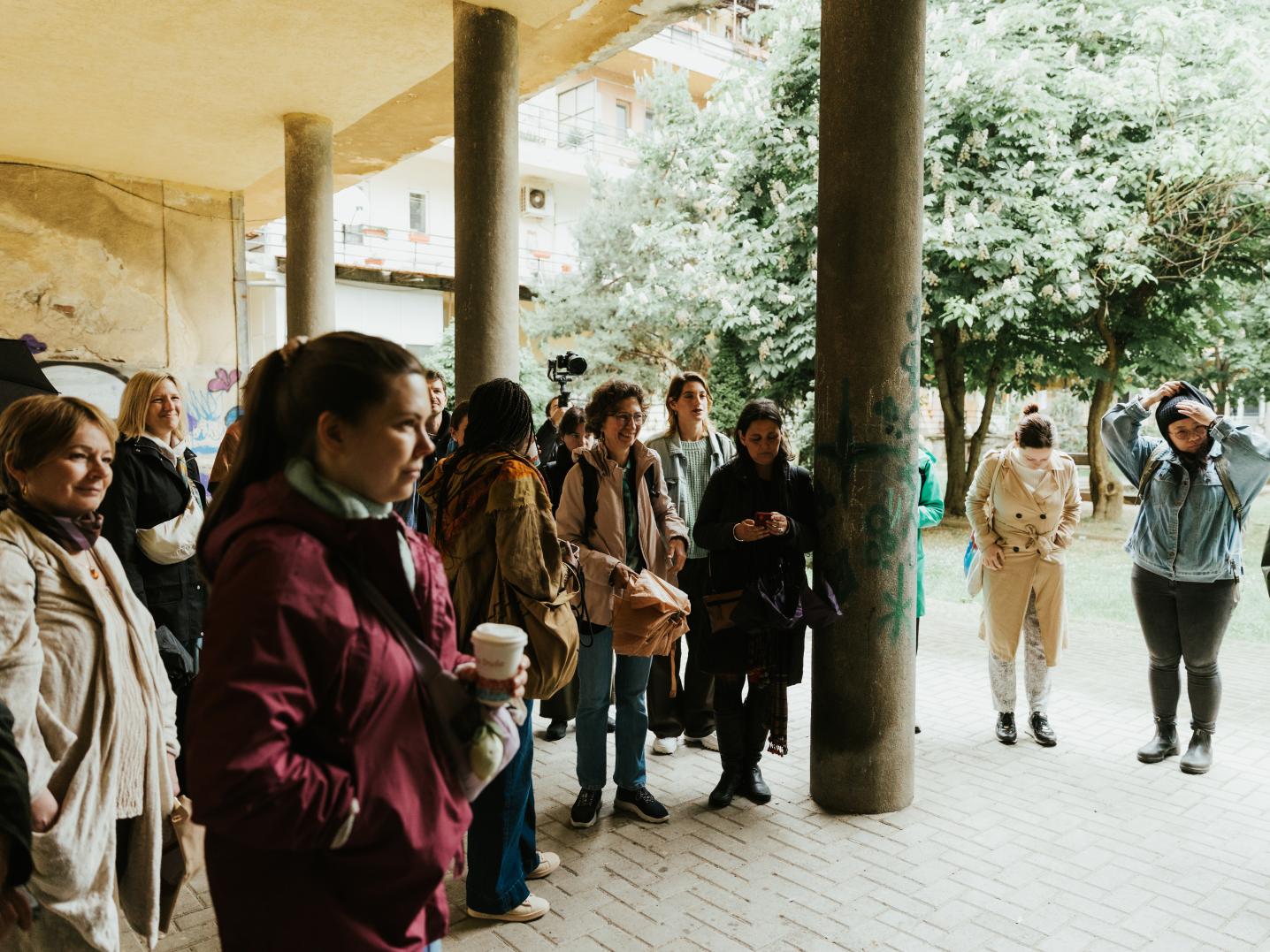
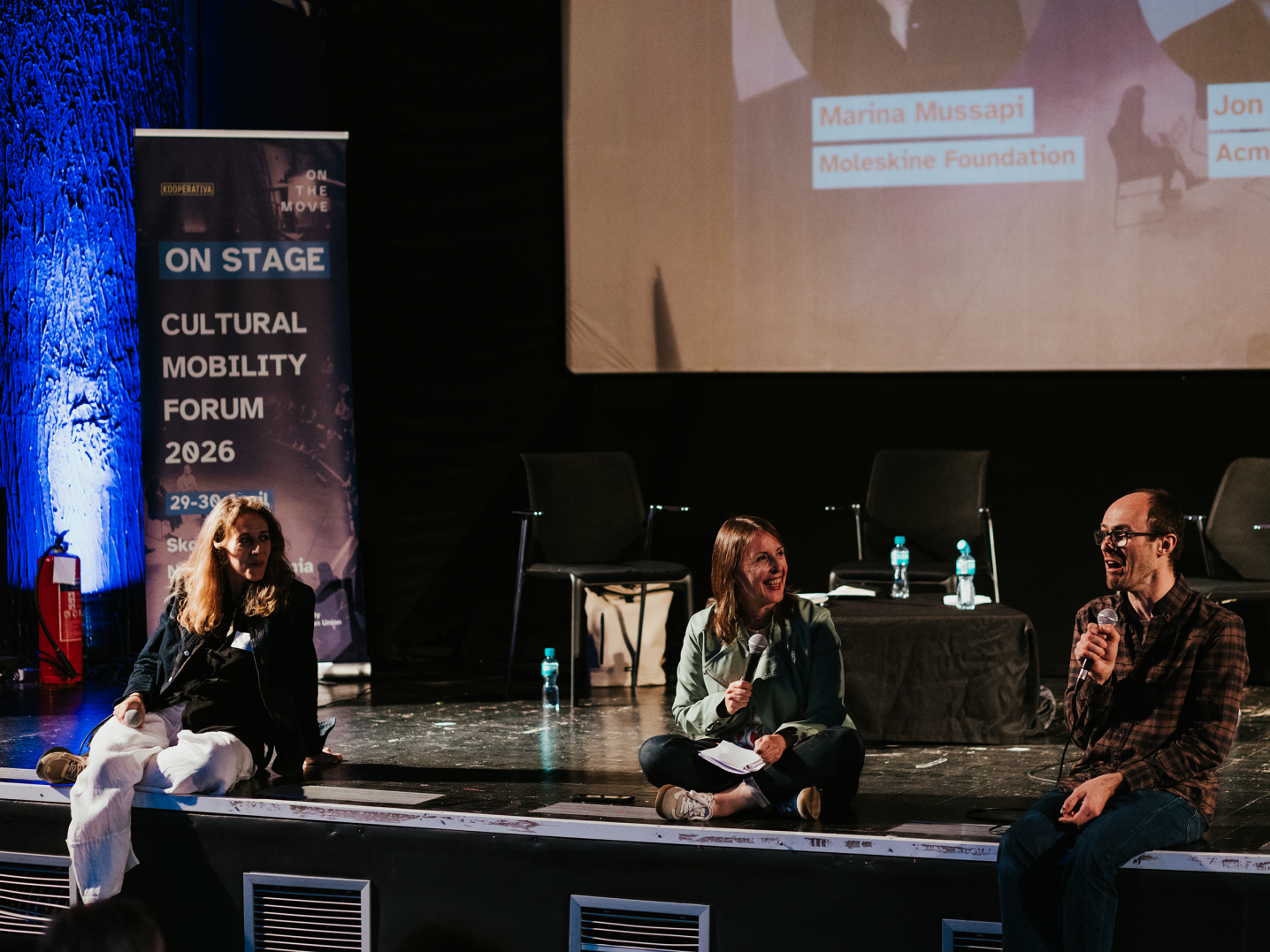
In April, our advisors Bojana Panevska and Judith van der Kooij attended On the Move's yearly event, the Cultural Mobility Forum, which this year took place in Skopje, North Macedonia. On the Move, a knowledge platform for international mobility in the cultural field, supports artists and professionals in creating a fairer, more diverse, and more sustainable approach to operating internationally. Each year, they organise the Cultural Mobility Forum to collectively explore international artistic and cultural mobility trends with its members and partners. This year, the focus was on cultural mobility justice, in partnership with Kooperativa – Regional Platform for Culture, a network of organisations and national platforms dedicated to independent culture and contemporary art in Southeast Europe.
After their participation at the Forum, we spoke with Bojana, who had just completed her final term as President of the supervisory board of On the Move, about the urgency of the topic in the field and what she has taken home with her from the conversations.
Could you please tell us about the annual Cultural Mobility Forum in general?
"As part of its multiannual programme, On the Move (OTM) organises the Cultural Mobility Forum once a year, together with a partner organisation(s) in the host country. The Cultural Mobility Forum is yearly curated by Director of Operations, Yohann Floch. The Forum is co-funded by the European Union with the aim of fostering dialogue on creating more inclusive and sustainable mobility, and it is free for the participants. The edition in Skopje was co-organised with Kooperativa, while the cultural visits were curated by Milica Ilić, an independent cultural worker.
The Forum is always combined with the networks’ General Assembly; thus, partially, the audience of the forum is the members, while the rest are representatives from the local scene. Each edition has a specific theme that is relevant to the region where the forum is happening, and it involves speakers, moderators, and representatives from that region. In past years, many relevant topics were addressed – climate justice, new generations and their work- while the forum in Skopje was focused on mobility justice."
Given that the topic this year was mobility justice, what kind of other themes and discussions emerged at the Forum?
"Mobility justice is an immense and layered subject. Some of its challenges belong to specific regions and political realities; others are painfully universal. For example, the bureaucracy of visa applications: no matter how much we as a sector can develop different tools to support artists in this process, like the Mobility Info Points from On the Move, the whole visa application process is still completely unpredictable, even abstract sometimes.
Beyond visas, we spoke a great deal about hospitality and care: about what it means to host and to support artists who are at risk or have been displaced. Residencies emerged as an important part of that conversation. They can offer immediate refuge and practical support, but they can also become spaces for exchange and reflection: places where certain conversations are still possible, sometimes only semi-publicly, especially in contexts where speaking openly carries a risk.
And inevitably, any conversation about mobility justice leads us to international solidarity. This became clear in the keynote by Marijana Cvetković from Stanica/Station – Service for Contemporary Dance and Nomad Dance Academy in Serbia, titled Mobility Justice: Fairer Policies, New Practices, and Radical Solidarity. Reflecting on the ongoing protests in Serbia, the censorship faced by the cultural sector, and the abrupt withdrawal of local subsidies, she showed how international networks and colleagues can become a form of support."
We know that systematic, unjust structures in cultural mobility have always existed, and they are hardening further with the rise of right-wing politics. How did this resonate with participants at the Forum?
"I believe the general discourse and reactions were hopeful, in the sense that we, as a cultural sector, can storm through this crisis and eventually find calmer waters again. But the question remains: who gets to sail through the storm on a yacht, and who is left clinging to an overcrowded lifeboat?
We have this tendency as people, and as a sector, I guess it is a survival instinct, to reassure one another that things could always be worse, that the present situation is still somehow manageable. I’m saying this as someone who is living in the privileged part of the world in Western/Northern Europe, but I’m very much aware and have experienced how quickly regimes can change, and chaos can ensue.
Having these conversations in Skopje once again reminded us why our work matters, but it was also evident that we need to reach further beyond the cultural sector and build stronger alliances across different sectors."
This was the last occasion you attended as the President of the On the Move Board. How do you look back in these past three years with your presidency?
"During my presidency, and in the three years before that as a board member, the structure of the board changed several times (each member can serve a maximum of two three-year mandates). And somehow, the board continued to bring together remarkable and inspiring people from different parts of the world, carrying different experiences. In that sense, the board has always reflected the network itself.
Stéphane Segreto-Aguilar, current director of Relais Culture Europe – Bureau Europe Créative France, had an official title of being the Secretary within the board, but in reality, we functioned as co-presidents and shared the responsibility and work. Both of us are firm believers that a position like this, being a president of a large international network, should be approached with care, reflection and a constant awareness that this position is also about listening.
On a personal and professional level, the past three years have been deeply meaningful; I (un)learned a lot about what it means to work internationally and to support the mobility of cultural professionals. Politically, the past years have not been easy, which has made our work even more important, but far from easy. The wars and conflicts in Ukraine, Gaza, Iran, Sudan and Afghanistan, to name just a few, have shaped the context in which we work. We have faced, and continue to face, resistance, shrinking support, and a lack of political commitment to international cultural cooperation. All of that just proves the importance and need for international networks like On the Move to continue their work while cultivating meaningful relationships and solidarity."
North Macedonia, where the Forum was held, is also your country of origin. How do you evaluate this issue of justice in cultural mobility in the local context and the Balkan region?
"I find this a bit of a complicated question, and I’m sure that every immigrant, expat, displaced person, newcomer – whatever we choose to call ourselves, or whatever labels society places on us - shares that same experience and feeling of never fully belonging anywhere. I can reflect on this question maybe as a knowledgeable outsider.
Having said that, it pains me so much to say that after all these years there is still systemic inequality in the mobility of cultural professionals from the region. Who can move and access opportunities is determined by broader social and economic structures larger than the individual themselves.
Of course, some things have changed. Travel may appear easier, especially as tourists, and there are certainly more opportunities than there were thirty years ago. Although cultural professionals from the region still do not move through Europe with the same ease and access, or sense of entitlement as many of their colleagues from other parts of Europe.
I think hosting is what people in that region are doing extremely well, but for travelling and working abroad, most of the time they still need to wait to be invited to sit at the table, rather than participate in designing it."
How do you envision the future of the network and platform with the new board and presidency appointed?
"The network is growing, and with each new member it is becoming more diverse in any sense of the word, and that is what gives the network its strength and resilience for the future. What is also special about On the Move, compared to other international networks, is the sense of intimacy; almost everyone knows each other – which makes the discussions we have very open, productive and inspiring.
Stéphane and I are leaving the network in very capable hands: those of the board, the members, and the new co-presidents, Ika Sienkiewicz-Nowacka from U-jazdowski Residencies in Poland and Giuliana Ciancio from Li.vin.g in Italy. Both bring intelligence, care and generosity to their roles, and a deep commitment to supporting the network and the wider cultural sector. And at the heart of it all is the amazing team of On the Move and the Secretary General, Marie Le Sourd, the main source of inspiration and a steady force that keeps the network moving.
We are living in times of polycrisis, and international solidarity and collaboration are our most valuable assets to protect, requiring more spaces for exchange and critical reflection. On the Move, with its 93 members from 33 countries (as counted in August 2026), will continue to be one of those spaces."