Search Artists
 Search Disciplines
 Search
Places
Search
Places
Image
Image
Role
Advisor for Hungary, Poland, Ukraine & Turkiye
Email
t.stepanovic [at] dutchculture.nl

 Michael Tsalka Mau P HH Producties Simone Lamsma Revolver Amsterdam
 Education
 Turkey
Italy
United Kingdom
Sydney
Montreal
London
Turkey
Italy
United Kingdom
Sydney
Montreal
London
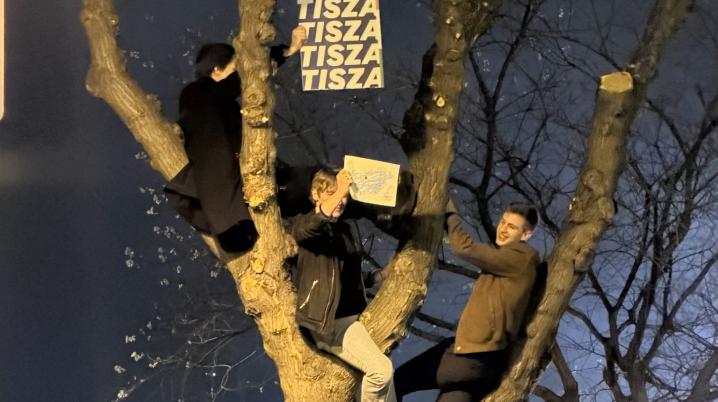
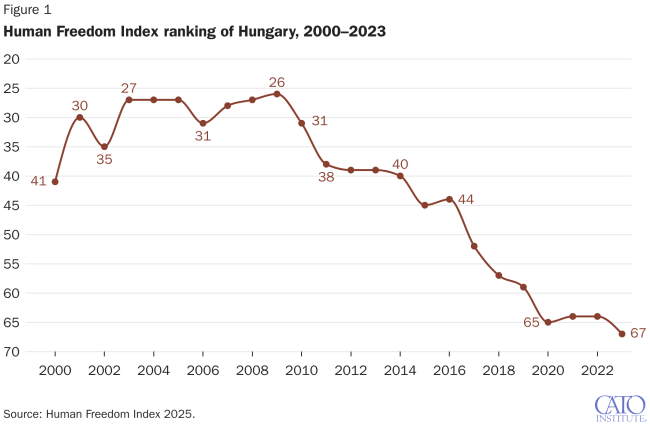
Hungary’s historic 2026 election brought an end to Viktor Orbán’s 16 years in power, as Péter Magyar’s TISZA Party won a two-thirds parliamentary majority. For many, the result marks the end of a long political era, while also opening a period of major uncertainty about what change will look like in practice.
In this reported feature, Tijana Stepanovic weaves together interviews and narration to reflect on the mood in Hungary’s cultural sector after the election.
As Hungary enters a new political phase, the cultural agenda of the TISZA Party is drawing significant attention — in Hungary and beyond — as expectations build around the complex work of repair and change ahead. But policy plans tell only part of the story. To understand what this moment means, I spoke with artists, cultural workers and human rights professionals in Budapest in the days after the election.
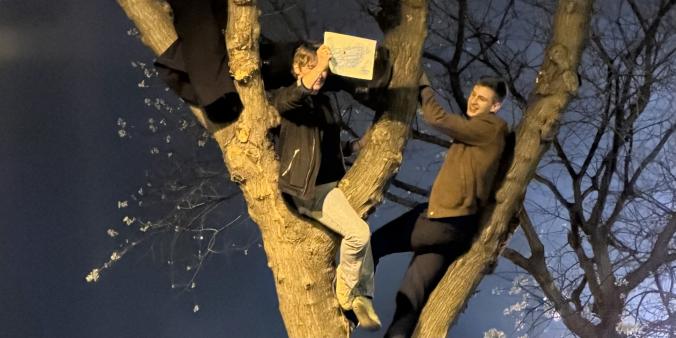
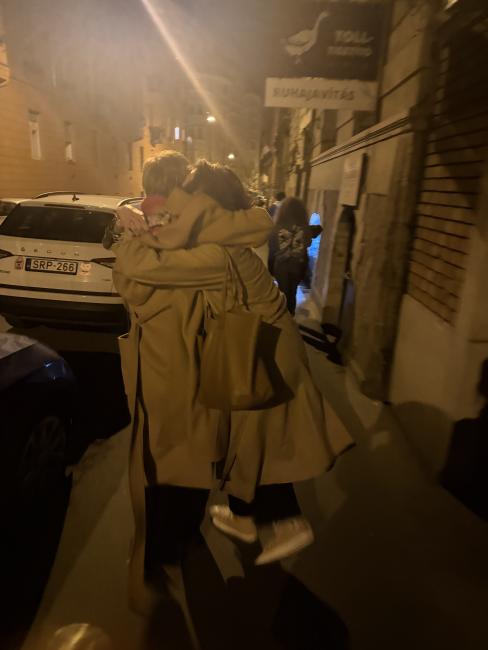
Election night in Budapest was euphoric, even cathartic for many. People danced in the streets, cars and public buses honked, flags waved, and the city seemed to celebrate collectively through the night. But in the cultural field, the mood that followed was more mixed. What many people describe is not simple celebration, but release after years of pressure: relief mixed with disbelief, hope mixed with fatigue, and a cautious feeling that something may finally begin to move.
That complexity runs through the conversations. After years in which political power reshaped not only institutions, but also confidence, expectations and the space for independent work, the question is not only what can change, but how change can take root. Taken together, the conversations suggest not a simple moment of liberation, but the start of a slower process of recovery, reflection and rethinking what cultural life in Hungary might become after Orbán’s “hybrid regime of electoral autocracy”.
One of the strongest themes in these conversations is that the election result has opened something emotionally and imaginatively — but without removing the political and moral tensions of the moment.
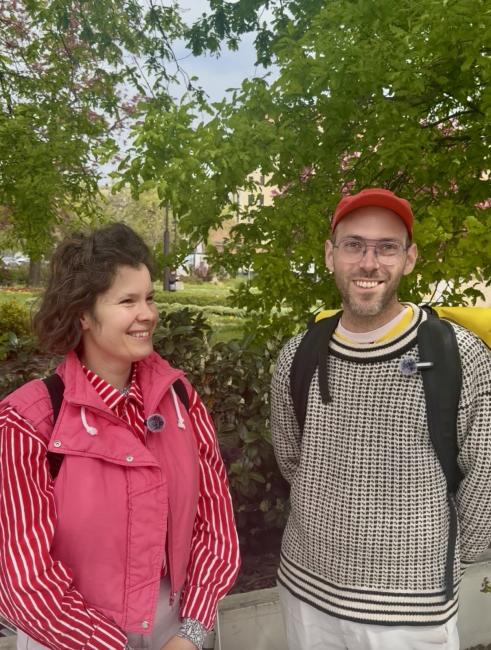
Visual artist Sári Ember puts that very clearly: “What I feel is that there is a huge amount of energy building up in the art world, something ready to break out. Even though I am not happy with the situation, I still feel a great sense of relief, and I feel that same energy in myself — that something needs to be done. This is not euphoria for me. I do not think a two-thirds majority is good in any situation, and I do not think it is good that only right-wing parties will be in parliament, or that we had to vote for a party whose programme we do not identify with at all. But change itself is a big thing, and it has a momentum that can carry many things with it.”
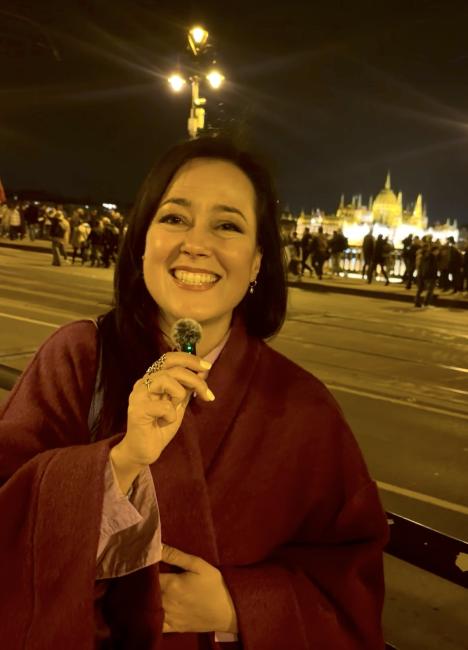
Relief is real, but it comes with questions about power, representation, and what kind of future is actually opening up. After years of centralised rule, many in Hungary know that concentrated power carries its own risks, regardless of who holds it. Mercedes Nieto, dancer and choreographer, describes the days after the election in similarly mixed terms: “After the cathartic election day, I feel a kind of fatigue and curiosity mixed with worry when I think of the future. I do feel hope, but Orbán’s system and the constant disappointment, shame and uncertainty that it caused were with us for too long. I think we will need a long time to heal, too, and to rediscover our identity in the new political context. It will take more than a euphoric night, especially for artists.”
That idea of healing matters. For many in Hungary’s cultural field, the past sixteen years have not only shaped institutions and funding. They have also shaped confidence and the ability to believe that things could be different.
At the same time, several people stress that the cultural field did not simply endure this period passively. Years of constraint also generated forms of resilience, solidarity and critical practice that may be among the most valuable resources available in the uncertain period ahead.
Graphic designer Zoltán Szmolka points to the survival strategies that emerged in a climate where support and exhibition opportunities were often scarce or unavailable: “What is exciting is that they [the critical cultural professionals – ed.] tried to survive, or somehow endure, this seemingly endless period by developing coping strategies that allowed them to keep functioning in an extremely difficult environment, where support and exhibition opportunities were hardly or not at all available. This led to the creation of many coping strategies and practices that could remain very valuable in the future as well, helping them continue to work under challenging conditions.”
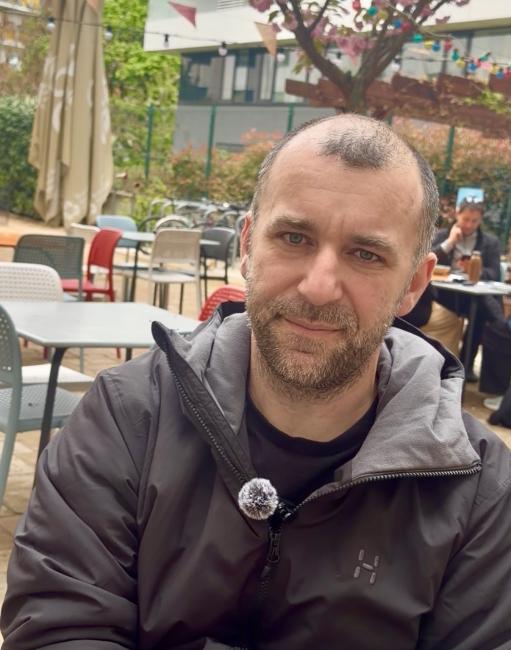
For Szmolka, one of the most important developments of recent years has been the rise of community-funded projects and stronger ties with international and regional partners. Just as important, this was not only about finding support, but about sharing practical knowledge: how to protect artistic freedom under pressure and keep working in a hostile environment.
He also points to the growing importance of participatory and socially engaged art. In recent years, many projects have been built around participation, social relevance and a critical response to the world around them. “I hope that this critical attitude will remain, because it is very important so that we can defend ourselves against ending up again in a similar situation to the one we are now somehow trying to get out of,” he says. One of the key lessons from these conversations is that the past sixteen years were not only a time of restriction. They also shaped a field that became inventive, adaptive and highly aware of the social role of culture.
What many artists hope for now is not only structural reform or better access to funding. It is also a broader shift in atmosphere. Nieto makes this point strongly. As an independent dancer working outside mainstream frameworks, she says the issue was not only the lack of support, but also the fact that support stopped feeling imaginable at all. “The biggest potential change I’m expecting is not even necessarily financial, it’s on a psychological and creative level.”
Her image of the hoped-for change is striking: “As a dancer, I feel this is very powerful on a psychological and even on a physical level, you start to breathe differently, stretch your muscles out after years of contraction, let your mind relax, and ideas flow. What liberates the body, liberates the mind. I can’t think of anything more inspiring now.”
Systems of power shape not only institutions, but also posture, breath, potential self-censorship, and the practical space in which artists work. Renewal, then, is about long-present artistic energies gaining more room, support, and visibility.
But if emotional and creative release is one part of the moment, institutional repair is another. And it will take a long time. Human rights advocate Júlia Iván speaks of the election result as a democratic opening and perhaps a last chance to make Hungary “European again” politically and institutionally. At the same time, she is clear that legal legitimacy alone will not undo years of state capture. Key positions remain occupied by Orbán-era loyalists, and real change will need time, legal expertise and political will.
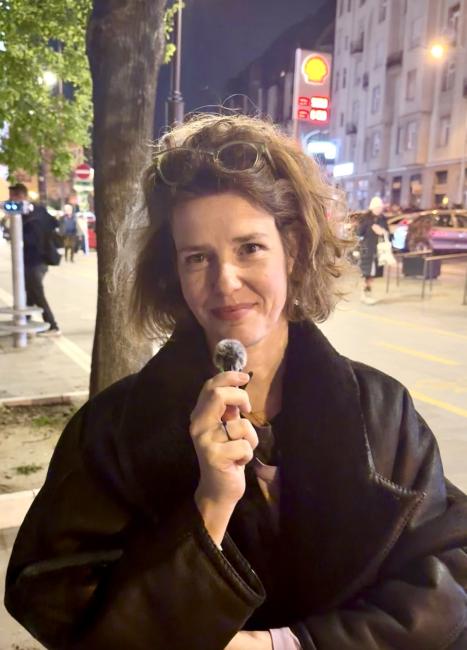
The same concerns appear in separate interviews with curator Dóra Hegyi and curator Tamás Don. (See links below.) Both point to reforms that could be crucial for the cultural sector: restructuring the National Cultural Fund, reducing the oversized influence of the Hungarian Academy of Arts, and creating an independent Ministry of Culture that works on a professional rather than ideological basis. Both also stress that the issue is not only more money, but fairer and more transparent support, including for critical thinkers, young artists, smaller organisations and work outside Budapest.
At the heart of this lies the legacy of centralisation and polarisation. Critical voices and progressive practices were usually not censored directly. Instead, they were often left without meaningful support, pushed to the margins, and excluded from the subsidies. Over time, this created a kind of desertification of the field: some large loyal institutions were heavily funded, while independent and critical actors had to survive with very little or nothing. These conversations make clear that the field is not simply waiting for change. For years, many cultural actors have been thinking together about what a healthier cultural policy could look like. As artist and theatre maker Pálinkás Bence György says: “Many sectors have tried in recent times to figure out together what kind of cultural policy we would like. And I hope that something from this can actually be realised.”
But Pálinkás also adds an important complication. Political change does not automatically make Hungary simpler. It may actually make some realities clearer. “Another interesting thing, on the day after the election, is that there is now no politician left in parliament who would even pretend to be left-wing. And it has become clear that this is a genuinely right-wing country. As artists, we have to do something with that.”
This is an important reminder that what lies ahead is not a simple cultural reset. Even outside the NER — Orbán’s “System of National Cooperation” — artists and institutions will still have to deal with the country’s deeper political and social realities. Pálinkás also offers one of the sharpest generational remarks in these interviews: “We are happy about the change. And I also realised that I have never made art outside the NER. That will be a new experience, and I am really looking forward to it.” For a younger generation, this is not only a change of government. It is the chance to work outside the only political-cultural framework they have ever known.
For Dutch and other international partners, this new phase may create real opportunities for collaboration. But these conversations also suggest that such cooperation should not assume equal starting positions. Ember recalls taking part, as a student, in a German-Hungarian project some twenty years ago. What stayed with her was not only the work itself, but the clear gap in confidence, institutional backing and access to resources between Hungarian and German participants. Those differences, she suggests, still shape cooperation today.
“It is a very simple thing, but in cooperation we start from very different positions, and I do not know what kind of cooperation can exist where these differences in privilege can be taken into account in a way that somehow compensates for them. This is not something we are entitled to, only that somehow we should be able to take part as equal partners in something together.” That may be one of the most valuable messages for international readers. Hungarian cultural actors do not need pity, and they should not be reduced to passive victims of Orbánism. But if cooperation is to deepen, it should take structural differences seriously — materially, institutionally and psychologically.
Taken together, these conversations suggest that the election result feels less like an end point than an opening. It has released energy, hope and imagination. But it has also shown how much repair still lies ahead: of institutions, of trust, of dialogue, and of habits formed under long pressure. Szmolka perhaps says it best when asked whether he feels optimistic. His answer is cautious and conditional: optimism will come when Hungary can begin paying attention to common affairs rather than constant polarisation; when people can talk about useful things, and about how to build together rather than by excluding one another.
That may also be the clearest horizon for the cultural field itself: to turn the energy of this moment into lasting renewal — in institutions, in collaborations, in public trust, and in the everyday conditions that allow artists to work freely.