 Search Artists
 Search Disciplines
 Search
Places
Search
Places
Image
Image
Role
Advisor for Egypt & South Africa
Email
m.vanschaik [at] dutchculture.nl

 Afrojack Daan Mathot Lemming Film Maas Theatre and Dance Blasterjaxx
 Education
 Germany
United Kingdom
Japan
Barcelona
Istanbul
Las Vegas
Germany
United Kingdom
Japan
Barcelona
Istanbul
Las Vegas
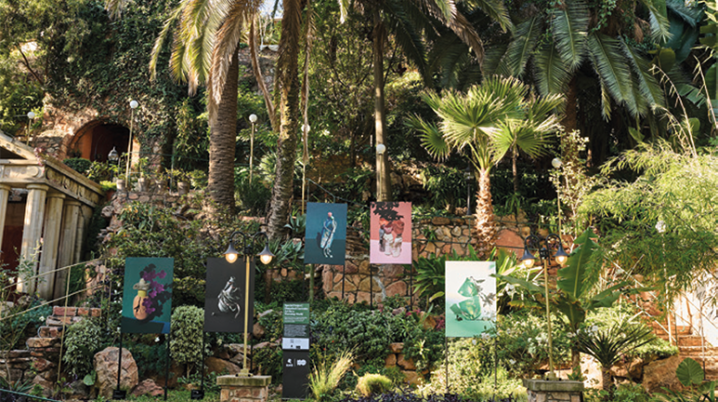
The South African art scene has an extraordinary amount to offer. Artists there find in collectivity a way to carry out their practice. The history of resistance and activism has left its mark in performance art, photography and printmaking. Not surprising, since social inequality is still the order of the day in a country where colonial history can be read on the pavement. In this urban landscape full of contrasts, Minke van Schaik went in search of interesting places for visual art and opportunities for future collaboration.
In Cape Town, my first appointment at the District Six Museum, a community museum that has focused on the history and present of the cosmopolitan neighborhood of the same name for more than twenty-five years. This district was vacated, expropriated and flattened by the apartheid regime in 1966, after which residents were exiled to the Cape Flats, among other places. The museum is a place that keeps the history and identity of this community alive. Upon entering, I see the plaques of various international donors and funders.
Curator Tina Smith explains that South Africa used to be the "sweetheart of the world" in terms of donations and awards, but is currently trying to hold its own as international funding retreats. This was happening before the abrupt departure of USAID (United States Agency for International Development) from many development and health projects. From the Netherlands, for example, we see the budget of the Ministry of Foreign Affairs in South Africa being used on collaboration with a focus on the activities of Dutch artists and institutions, rather than direct investment in cultural infrastructure.
Yet there is a relatively extensive infrastructure of museums and art institutions. First to stand out is the Zeitz Museum of Contemporary Art Africa (Zeitz MOCAA) in the eye, an institution that bears the name of German art collector and financier Jochen Zeitz. The building in the shape of a grain silo was created from the now classic marriage between contemporary art and real estate development. Another private institution is the Norval Foundation, which is located a little further out of town in the Tokai region. In Johannesburg, we find a similar institution, Joburg Contemporary Art Foundation which is showing an interesting exhibit on ecology at the time I visit it, and the podcast Knowledge Talks and other academic resources that build on them. Eleven public museums fall under the umbrella body IZIKO museums. It covers historic heritage sites from the Castle of Good Hope to the IZIKO South African National Gallery. At the time I visit the latter, only the permanent exhibition is on view, which still feels somewhat Eurocentric because of its classic French-academy layout full of big names.
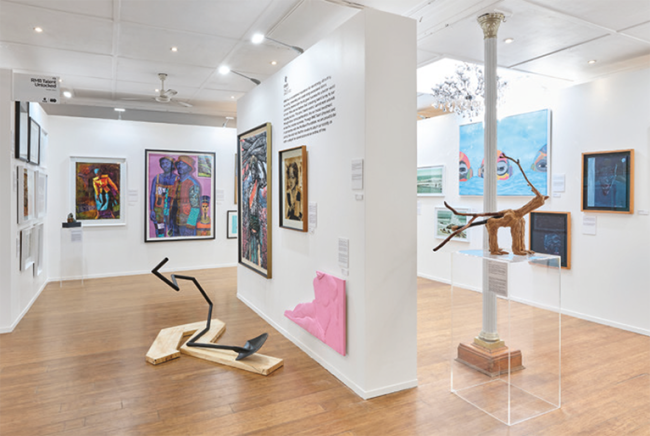
For contemporary art, I move on to a number of galleries and presentation spots during First Thursday's, the monthly evening opening of art and cultural venues, which attracts a wide audience. Here I end up at AVA, an artist association on Church Street in Cape Town. After wandering past several solo presentations, I pick up a book about the Joburg Biennial, at which the director taps me on my fingers. The bookshelf turns out to be an installation. Very well, I am allowed to keep browsing. I come to the history of the Johannesburg Biennial, which was organized by internationally renowned curator Okwui Enwezor. I pass stories of exchanges, projects and quick encounters with artists in the airport departure lounge that led to legendary exhibitions. The hopeful Biennial was organized only twice in the new post-apartheid South Africa, in 1995 and 1997. The familiar story of dwindling funding in an unstable landscape.
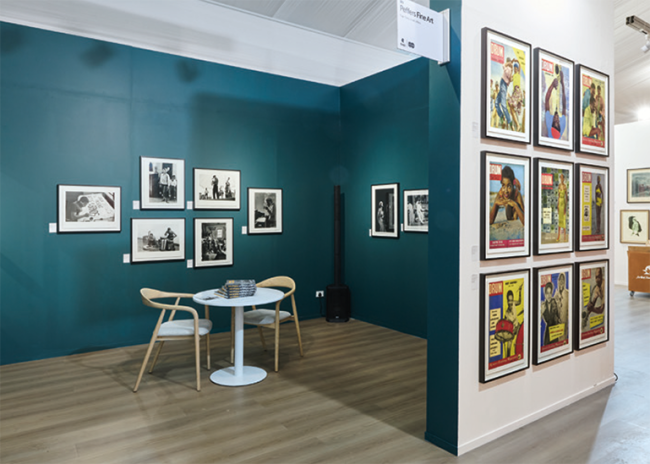
The largest financing instruments are the National Arts Council and Arts & Culture Trust. In addition, the presence of donors and foreign representation still stands out, e.g. Pro Helvetia and LAPA Project and Residency Space - Goethe-Institut South Africa which has its own space and offers residencies for artists from across the African continent. From the Netherlands, the Prince Claus Fund a well-known financier of emerging and established talent in the Global South. I am also struck by the position of major banks and other financial institutions, judging from the major art fairs and awards that all bear the name of a major bank or their main sponsor.
Following this are the major art fairs. FNB Art Joburg is an annual phenomenon that takes place in September, and in February it's time for Investec Cape Town Art Fair. The audiences visiting the fairs follow the orientation lines of the cities themselves: where Cape Town is very European oriented, in Johannesburg they look toward the rest of the African continent. A common problem the two fairs face is the price a gallery has to pay to rent a booth, This is where the major art fairs connect. FNB Art Joburg is an annual phenomenon that takes place in September, and in February it's time for Investec Cape Town Art Fair. The audiences attending the fairs follow the orientation lines of the cities themselves: where Cape Town is very European oriented, in Johannesburg they look toward the rest of the African continent. A common problem facing the two fairs is the price a gallery must pay to rent a booth, leaving little room to offer newcomers or experimental presentations.
Also, the amount of the FNB Art Prize, for example, has not been adjusted for inflation in years, leaving it with little financial value, I understand from an interview in ZAM Magazine with Thato Toeba, the Amsterdam-based final winner of the 2025 prize.
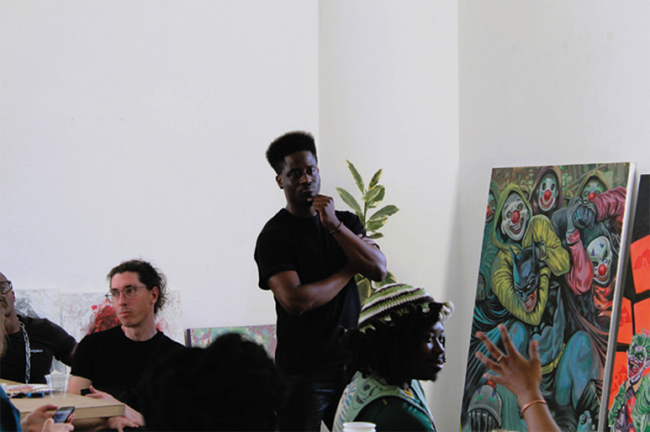
From this need for presentation capabilities is Contra.Joburg was born, an annual studio tour that is bused in. I speak to organizer Sara Hallatt at August House, a studio and residency spot in a former textile factory in Johannesburg. Contra's concept is pretty simple: instead of a big event at an expensive venue, they organize a gallery tour of the Central Business District with hop-on-hop-off buses. All the art is for sale, directly from the artist. It brings studios and artist in residency spots such as August House, Bag Factory, Ellis House and Victoria Yards seamlessly together.
It is during studio visits that I get an impression of the working atmosphere that exists in the South African art world: younger artists work as assistants to artists who are already more advanced in their practice, and there is much room for exchange and sharing good advice. At August House, for example, I join an artist lunch, where three artists who have studios there (permanently or as part of a residency) present their work and receive tips and feedback.
The informal method of mentoring and knowledge sharing has also found institutional forms in a few places, such as the Market Photo Workshop, founded by documentary photographer David Goldblatt. Information and resources are shared among themselves, "Collectivity as Infrastructure," artist and researcher Molemo Moiloa called it in a article from 2021. Some networks further organize this collectivity, such as the well-known VANSA (Visual Arts Network of South Africa), the Johannesburg-based Bubblegum Club by artist Jamal Nxedlana, and IQOQO, which grew out of the French Institute of South Africa (IFAS). These are still active in alternating sizes, changing over time more as rich archives of previous collaborations and research.
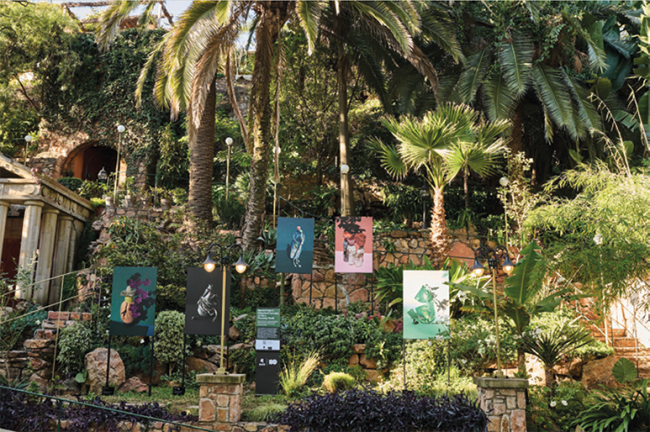
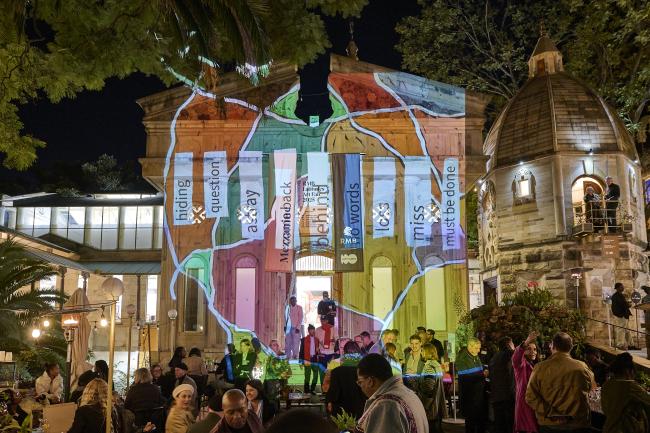
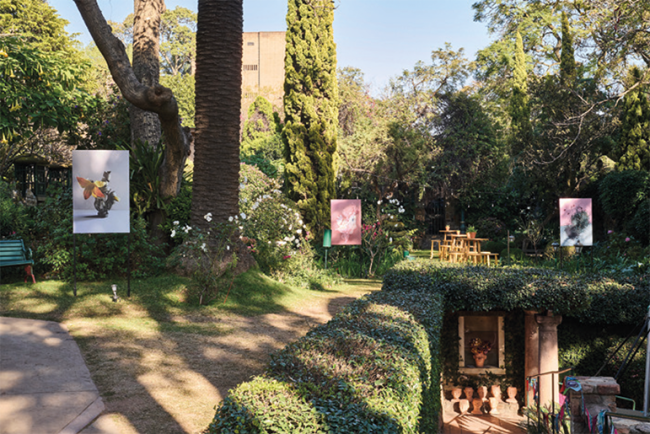
Another player is RMB Latitudes, an online art-buying platform that offers an alternative to the yawning gap between artists with galleries and those without. Director Roberta Cocci says the platform began to take wings during covid, and has since evolved into a many-headed institution. Again, a simple concept: both artists and galleries can sell there, with a commission for using the platform. Due to the declining live audience during the covid period and the need to go online, Latitudes also got larger galleries on board, something that probably would have been unthinkable under normal circumstances. From this online base, Latitudes also organizes an art fair: an annual event at their fairy-tale venue Shepstone Gardens, which serves as an office and project space for the rest of the year. Interestingly, Latitudes itself also takes a position in art appreciation and interviews. In doing so, it joins other South African and international platforms, such as Arthrob and Contemporary&.
Yet the physical gallery retains a strong position in the South African art landscape. Big names such as Goodman Gallery and Everard Read exist alongside blank projects or BKhz Gallery, founded by artist Banele Khoza. They have an international profile, see for example the recent article on the platform of Art Basel. Also interesting to name is how Stevenson operates a venue in both Amsterdam and Cape Town. A fine example of the many longstanding cross-links that exist between the two countries, of artists, institutions and practices that track, explore and question the historical ties between the two countries.
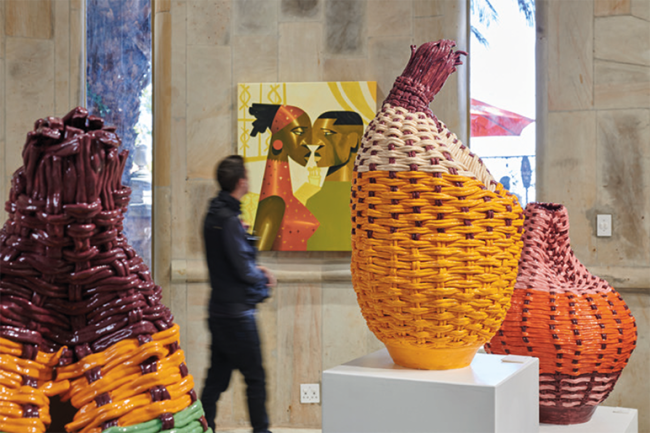
The same is being done by South African artists in the Netherlands, for example Buhlebezwe Siwani whose inspired work has been on display in several Dutch museums and project spaces in recent years. The historical relationship between South Africa and the Netherlands is often the starting point of her work, and the lack of awareness of this that exists among the Dutch population. There are more artists who move between the Netherlands and South Africa. Of one, I come across a solo exhibition at project space A4 in Cape Town: Moshekwa Langa turns out to live in Amsterdam. Thus, I am constantly tossed back and forth between Dutch connections in South Africa and South African connections upon returning home to Amsterdam, and various institutions that facilitate these connections. Through the Rijksakademie and De Ateliers, artists find their way from South Africa to venues in the Netherlands and then to other places in the world. An even more pronounced connection is the Amsterdam Thami Mnyele Foundation, which facilitates residencies for visual artists. At its inception, born out of the anti-apartheid movement, it was a safe haven for South African artists, but soon the foundation invited artists from across the African continent and the diaspora.

In the other direction, we see Dutch artists participating in the South African scene. Even before I leave, I speak to the Dutch photographer Sem Langendijk about the artist-in-residency he is organizing there. His work portrays the divisions of society. In South Africa, he finds plenty of examples of this. He likes to share his place, experience and contacts with other artists there, which is how he came up with the idea of starting an artist-in-residency. In Oaklands AiR he offers a cultural experience in seclusion in creative surroundings on the edge of a nature reserve - a complete contrast to the urban environment of my trip to Cape Town and Johannesburg.
Seen from the Netherlands, South African artists offer interesting perspectives. And indeed they did not disappoint. In Cape Town I appear to have picked the right time to visit, namely during the ICA Live Art Festival, a program by curator Jay Pather that provides a stage for an interesting network of south-south collaborations. The festival is somewhat akin to the annual Afrovibes Festival in Holland, where Pather has just stepped down as curator. I visit Live Art at the very beginning of my trip, and see so many interesting performances there that I expect to encounter it more often during the rest of my stay, but that doesn't happen. I later mention this to artist and organizer Molemo Moiloa, who points out that the Live Art Festival is really an exception in a landscape where there are few if any presentation opportunities for experimental artists. When I ask where those artists are then for the rest of the year outside the Live Art Festival, she replies "In Europe," only to add "I'm sorry," with that typical (South) African habit of apologizing for things you are not responsible for.
The Dutch embassy in South Africa supports Dutch artists in realizing their work. For example, you can apply for funding for a cultural project in South Africa. It also offers Matching Fund International Heritage Cooperation opportunities for projects that encourage attention and understanding of heritage. The Mondrian Fund offers opportunities through a Voucher Inter-national, the scheme International Art Presentation, which provides opportunities for artists to undertake a project in South Africa and through the scheme Artist Project the possibility of undertaking a residency exists. Private funds that offer grants are Amarte Fund, the Niemeijer Culture Fund Foundation, the Culture Fund Whether the smaller Gerbrandy Culture Fund Foundation. These and other funds can be found in the Cultural Mobility Funding Guide from DutchCulture.
International cultural collaborations are often long-term projects. Especially in South Africa. Mutual understanding and awareness of the uneven playing field are at the foundation of a balanced collaboration. But it is also a country where an enormous amount is realized, where new projects can emerge through collaboration, and your artistic practice can take on a new form. Would you like to discuss projects or collaborations with South Africa (or any of the other twenty-three focus countries in the International Culture Policy)? If so, please contact DutchCulture.
Thanks to Molemo Moiloa (Andani.Africa), Sara Hallatt (August House/ Contra.Joburg), Tina Smith (District Six Museum), Jessica Glendinning (Embassy of the Kingdom of the Netherlands in South Africa), Sem Langendijk (Oaklands AiR), Judith Westerveld and Lonneke Bär (DutchCulture).
This article was previously published on BK-informatie, a trade magazine for artists.