Search Artists
 Search Disciplines
 Search
Places
Search
Places
Image
Image
Role
Advisor for Belgium, France, Germany & the United Kingdom & Interim Advisor for Italy & Spain
Email
a.moerk [at] dutchculture.nl

 de Stilte KI/KI Zinzi & Evertjan Arthur & Lucas Jussen Tramhaus
 Education
 Austria
Switzerland
Canada
Shanghai
London
Hamburg
Austria
Switzerland
Canada
Shanghai
London
Hamburg
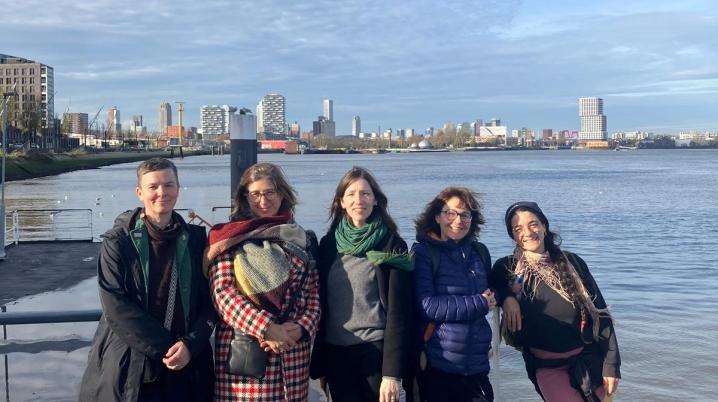
In November 2025, DutchCulture invited five cultural professionals from Belgium, France, Germany, Spain and United Kingdom to exchange about the regenerative practice in the cultural sector. The programme grew out of a shared curiosity: how can cultural work contribute to regenerating the living systems we are part of? Our five visitors are all part of cultural spaces abroad hosting exhibitions, events and residencies that are committed to improving the health of their ecosystems in a time of waning biodiversity and climate catastrophe. Through their cultural programming and art residencies, they offer alternative ways of experiencing a world that centers around more-than-human life. In this article series, DutchCulture reaches out again to these five visitors to share their views on regenerative culture, important aspects of their organisations and residencies, and how you could be part of it.
Evi Swinnen (Timelab, Ghent, Belgium) is an unconventional matchmaker, joining the complex dots between people, networks, and opinions. As a practice-led researcher and community-builder, she is actively investigating how to respond to crisis by building new social forms. As founder and director of Timelab, she has initiated and steered a number of research projects between art, industry, government and civil society. These include citizen science projects, co-creation innovation and participation projects and different projects on shared public space and non-hierarchical organisation models.
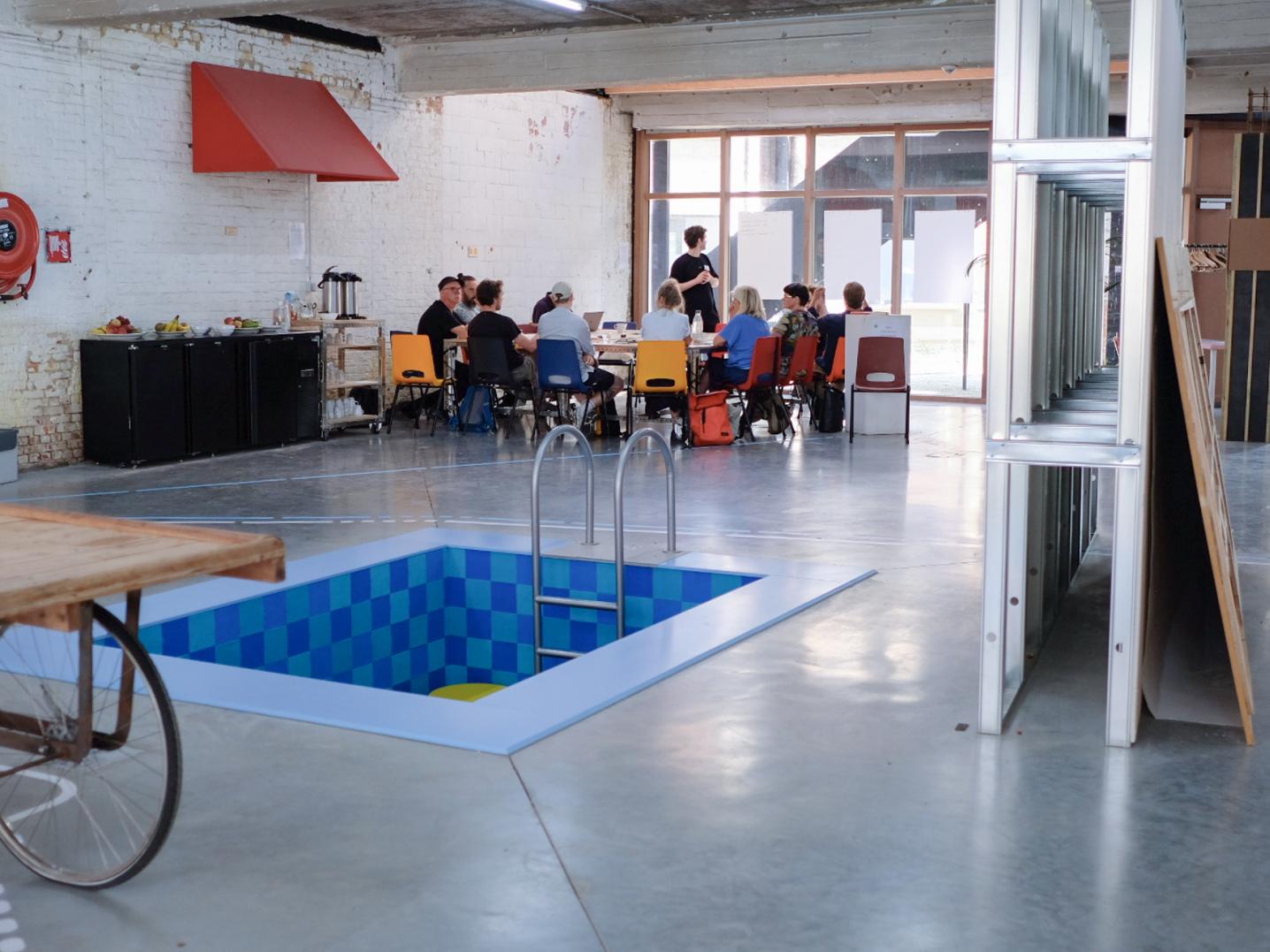
Evi Swinnen: "Timelab creates space and time for a society in motion. And you can take this literally. By creating a physical space and an open approach, we strive to create mental, social, cultural and artistic space for atypical collaborations, self-exploration and systemic transformation. Different needs arise throughout the span of an artistic career. Through a varied programme and, above all, sufficient room for experimentation, we try to meet the many needs that exist among artists. We focus specifically on the work of designers and architects, who question social themes. To do this, they benefit greatly from being in contact with a wide range of other areas of expertise. That is why we create an environment where scientists, entrepreneurs, engineers, policymakers and citizens are also part of the field. We always do this on the basis of equality, with everyone contributing their strengths to a common whole. We are inspired by the open source community and the commoning movement. Our sphere of activity is mainly international, while the research questions are often tested locally. This creates a cosmolocal effect that generates insights from a highly situated knowledge base that can be translated elsewhere. As a fractal, we believe that the smallest unit contains all the power that can grow into a strong network. Just as a seed already contains all the elements of a tree."
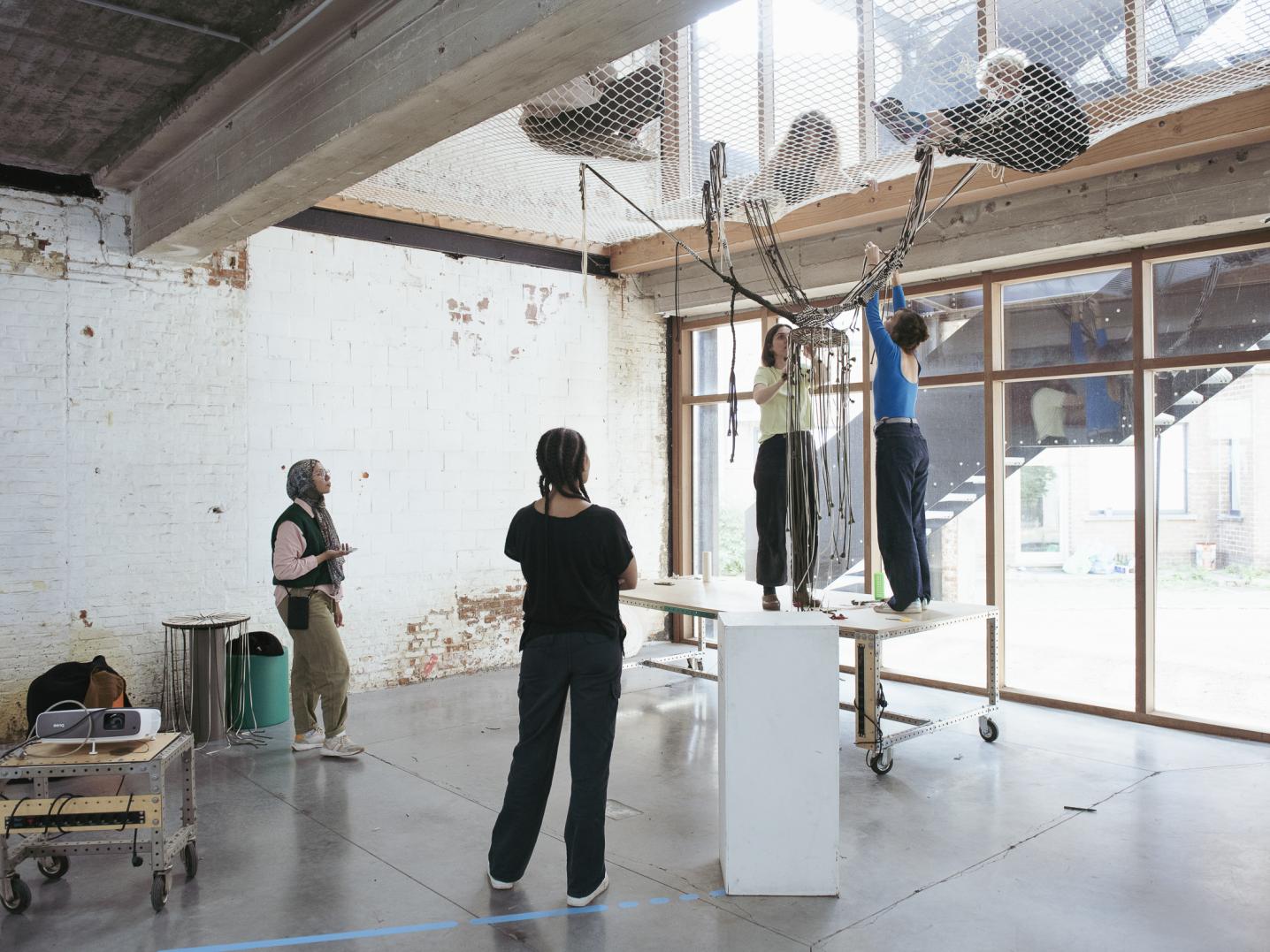
Evi: "Regeneration is the result of the power that arises from generative systems. Generative systems generate outcomes that arise within the boundaries of the ecosystem. By always acting with the ambition to remain in balance, a generative power is created. Like the cycle that nature creates naturally. Like the process of composting or fermenting, where you do not have total control over the outcome and work in dialogue with the world, tentatively, with advancing insight and incrementally. You do not take control, you anticipate and listen to the environment, both human and more than human. You adopt this attitude in all your actions, from how you lead a team to how you create or communicate a programme. This may sound obvious, yet it is at odds with the competitive world we live in, where better, newer and smarter always prevail and we forget the impact of our actions and, equally, of our inaction."
Evi: "I was greatly inspired by the work of Ron Eglash, professor of anthropology at the University of Michigan and student of Donna Haraway. His career began at MIT, but he soon sought out the more cultural and human aspects of technology. He researched fractal structures in Africa and discovered that this formal expression of a design principle was embedded in an entire culture and tradition, in a different world view in which the link between past and future becomes much more visible through the present. He talks about Generative Justice as the principle whereby social systems are able to generate justice without the struggle for scarcity or competition. When communities are able to create endless value, we speak of abundance rather than scarcity. The insight that the fear of scarcity is part of a supposed worldview got me thinking. An insight that can also be found in the work of Vandana Shiva. ‘As humans, we are just one of millions of species on Earth. It is time we start behaving that way.’"
Evi: "It was a pleasure to be part of a group of strong women who run places in Europe. We don't make enough time to recharge our batteries together. What strikes me is that many women do impressive work behind the scenes. I saw this at DutchCulture too, at many different levels and in many different contacts during the visits and conversations. What stayed with me is that when we talk in depth with each other, we experience the same daily sh*t that we don't always put into words. The struggle for existence, the struggle against precariousness among the people we meet every day, the belief in the power of people and the community, but also the feeling that the world is narrowing and the axe is waiting behind the door to eliminate anyone with an outspoken opinion who stands out from the crowd. But also the belief that with our places, art, power of commoning and ecosystem thinking, we are creating an antidote and that this is essential, as our duty as human beings, to use it against the souring, rabble-rousing and false information."
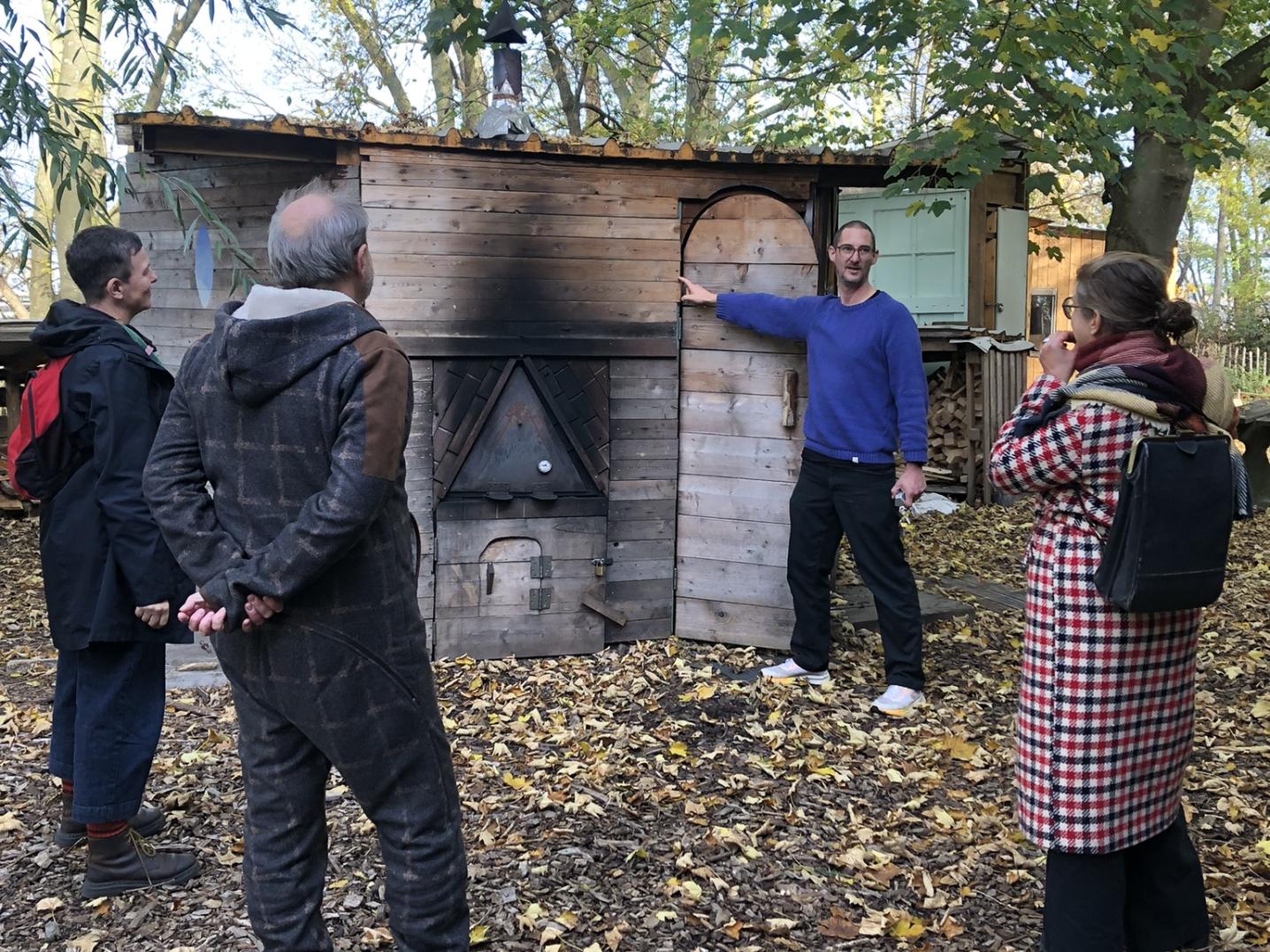
Evi: "I love the community power of networks such as PAF (platform for architecture & feminism), the absurdity of collectives such as Dear Pigs, the confidence of initiatives such as Kanal in Brussels, each of which contributes in its own way to something so essential: hope as a result of optimism and decisiveness."
Evi: "In addition to our residency programme, which does not operate on an open call basis, there are numerous opportunities to get involved. Every year, we organise a public programme that provides context for our themes. This year, the programme is entitled Symbiotic Hospitality, in which we explore ways of guesting and hosting. The programme itself also bridges the gap between participants in lectures and workshops and taking more initiative themselves, thereby functioning as a collective. We bring international guests to Ghent, including Alexandra Pimor, a lawyer who talks about the rights of the more-than-human. Here, a strong link can be made with the Zoöp movement. Frederick Van Amstel is also coming to Ghent from Brazil to give a lecture on participatory strategies and the design of methods to increase agency."
DutchCulture connects regenerative ideas and practices across borders, enabling people‑to‑people exchanges that are rooted in fairness, mutuality, and long‑term trust. In an international context, this means working intentionally with partners to stimulate exchange. Our work has to be locally resonant to be globally relevant: we build networks of artists, cultural workers, and organisations who share the commitment to an interconnected world.
The word Zoöp is short for Zoöperation, cooperation with zoë the Greek word for life, ζωή, It is an organisation form and learning process that incorporates non-human perspectives into decision-making, advancing regenerative practice. The Dutch Zoöp-model was developed at Nieuwe Instituut in Rotterdam, the first Zoöp in the world, and set up the Zoönomic Institut to grow the Zoöp network. Any organisation with an intrinsic motivation to contribute to the health of the ecosystems they are part of, can become a Zoöp and learn how to contribute to the well-being of their multispecies communities.